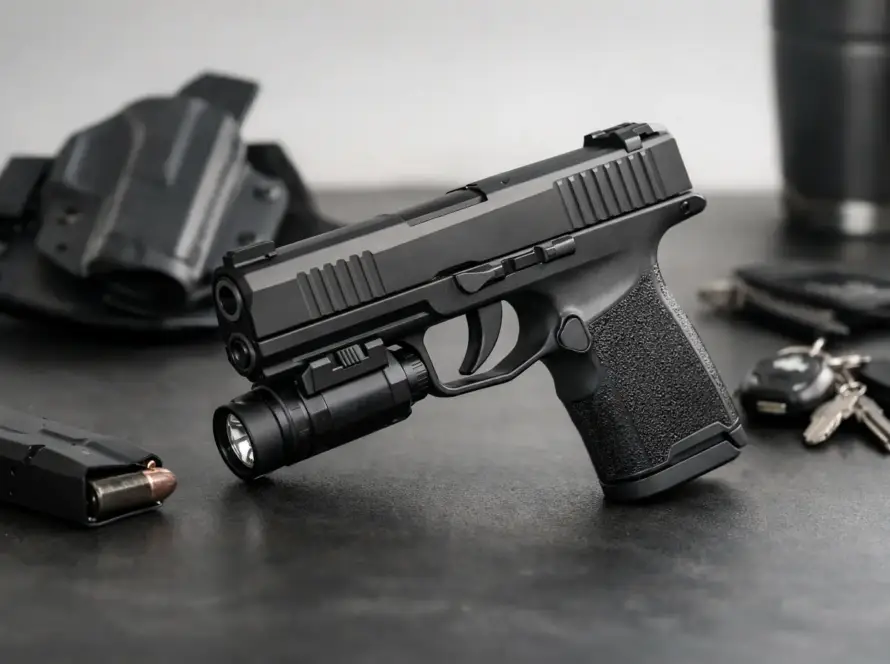
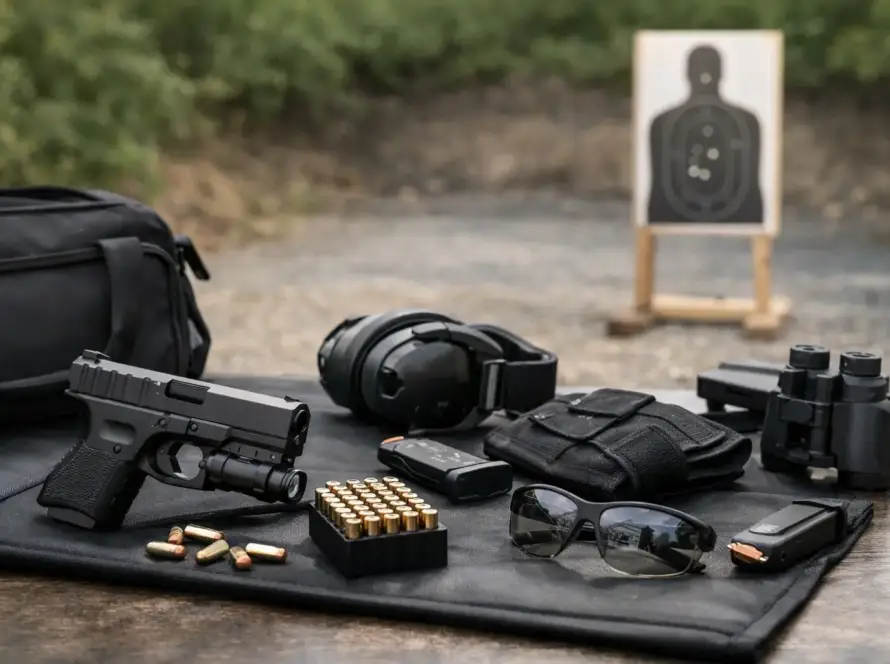
Florida’s permitless carry law changed the first question many owners ask before buying a holster or preparing for daily carry. Concealed carry weapons Florida residents may lawfully carry are not a free-for-all: eligibility rules, prohibited locations, safe handling standards, and private-property restrictions still apply. Carrying responsibly starts with understanding those limits before a firearm goes on your belt, in a bag, or in a vehicle.
This guide provides practical general information for adult firearm owners. Firearms laws can change, and specific circumstances matter. Review current state and local requirements and seek qualified legal guidance when you need advice about your situation.
Concealed Carry Weapons Florida: The Core Rule
Florida generally allows an eligible person age 21 or older to carry a concealed firearm without first obtaining a Florida Concealed Weapon or Firearm License. This is often called permitless carry or constitutional carry. Eligibility is the key word. A person who is prohibited from possessing a firearm under Florida or federal law does not become eligible simply because Florida does not require a state carry license for qualifying concealed carry.
The law concerns concealed carry. Florida does not generally allow open carry of firearms, except in defined situations such as lawful hunting, fishing, camping, going to or from those activities, and certain shooting or firearms-related uses. A firearm that becomes plainly visible during ordinary daily activity can create legal and practical problems. Choose carry equipment that holds the firearm securely, maintains consistent concealment, and allows you to control it without repeated adjustment.
A Florida license remains a useful option for many owners. It may support reciprocity when traveling to states that recognize Florida licenses, subject to the destination state’s current rules. It can also make your legal status clearer in settings where a license has practical value. Do not assume a Florida license works everywhere. Interstate carry laws, prohibited locations, vehicle rules, and recognition agreements vary by state.
Eligibility Comes Before Equipment
Before shopping for a concealed-carry handgun, holster, or carry bag, confirm that you are legally allowed to possess and carry a firearm. State and federal disqualifications can involve felony convictions, certain domestic-violence matters, qualifying court orders, unlawful controlled-substance use, mental-health adjudications, and other circumstances. A past charge, sealed record, military discharge issue, or protection order can require a closer review than a quick online answer provides.
The purchasing process and the carry rules are related but not identical. Completing a lawful firearm purchase does not replace your responsibility to understand where and how you may carry it. Likewise, a person may have a firearm lawfully stored at home while facing restrictions on carrying it in public. Treat each decision separately: ownership, transport, storage, and concealed carry each have their own requirements.
For new owners, professional instruction is not just a box to check. A quality course should cover safe loading and unloading, safe muzzle direction, trigger discipline, malfunctions, drawing and reholstering procedures, legal use-of-force principles, and post-incident communication. Practice should begin slowly with an unloaded firearm in a verified safe condition, then progress to live fire at a properly managed range.
Know the Places Where Carry Is Restricted
Permitless carry does not authorize carrying everywhere. Florida law restricts firearms in a range of sensitive locations, including law-enforcement facilities, detention facilities, courthouses, polling places, meetings of governmental bodies, legislative meetings, many school and college facilities, and airport passenger terminals. Federal buildings, secured areas, and certain other federally regulated locations can carry separate and serious restrictions.
Some restrictions are fact-specific. Schools, colleges, places that serve alcohol, events, government facilities, and transportation areas may involve exceptions, separate statutes, posted rules, or conditions that depend on the exact location and purpose of your visit. When the answer is unclear, secure the firearm before entering and verify the rule rather than relying on a sign, an employee’s assumption, or advice from another customer.
Private property owners and businesses also control access to their property. A business policy or posted notice does not always carry the same legal effect as a statutory prohibition, but an owner or authorized employee can direct you to leave. If that happens, leave promptly. Staying after notice can turn a simple disagreement into a trespass issue.
Carry in a Vehicle With Control and Discretion
Florida’s vehicle rules are often discussed in oversimplified terms. The practical standard is straightforward: keep the firearm under your control, avoid unnecessary handling, and secure it whenever you leave the vehicle. Do not handle, display, or reposition a firearm in a parking lot because a holster is uncomfortable or because you want to check concealment.
A vehicle safe or lockable storage solution helps reduce unauthorized access and theft risk. Choose a unit that can be secured to the vehicle, fits the firearm without forcing controls or sights against hard surfaces, and is accessible only when needed. A simple cable lock may have a role in temporary storage, but a dedicated lockbox is generally the stronger option for regular vehicle use.
Never leave a firearm loose in a center console, glove box, door pocket, or under a seat. Those locations are easy to access, easy to overlook, and frequent targets in vehicle break-ins. If you routinely transition between carry and storage, build a repeatable process: arrive, park, verify the firearm’s condition, secure it without handling it more than necessary, and confirm the container is locked.
Select Carry Gear for Safety, Not Appearance
The holster is safety equipment. A proper concealed-carry holster should completely cover the trigger guard, retain the firearm during normal movement, stay positioned on the body, and allow a consistent grip before the draw. Avoid soft or poorly fitted holsters that can collapse when empty, shift during movement, or allow clothing and foreign objects into the trigger area.
Fit matters as much as material. A holster should be made for the specific firearm model and compatible with its installed optic or weapon-mounted light, if applicable. A rigid inside-the-waistband holster can offer excellent concealment for many users, while an outside-the-waistband design may be more comfortable where a cover garment works. Pocket holsters can be appropriate for compatible compact firearms, but the pocket must contain nothing else.
A quality belt, properly sized cover garment, and retention-focused holster often solve more comfort and concealment problems than switching firearms. Test your setup at home with an unloaded firearm after verifying its condition. Sit, bend, reach, enter a vehicle, and check whether the holster remains stable and concealed. If you constantly touch or adjust the setup in public, the setup needs work.
Daily Carry Requires Safe Habits
Carrying a defensive firearm raises the standard for everyday judgment. Avoid escalating arguments, do not display a firearm to make a point, and leave situations that can be safely avoided. A firearm is not a tool for settling disputes, protecting pride, or pressuring another person.
Florida does not generally impose a universal duty to proactively tell a law-enforcement officer that you are carrying, but calm communication and strict compliance with lawful instructions are essential during any encounter. Keep your hands visible, do not reach toward the firearm, and answer questions directly. If an officer asks whether you are armed, be truthful.
At home, concealed carry responsibility continues with secure storage. Firearms should be inaccessible to children, unauthorized adults, and visitors. Quick-access safes can support defensive readiness while helping prevent unauthorized handling, while larger safes are better suited for long-term storage of multiple firearms, ammunition, and valuable accessories. The right choice depends on household access, available space, and how quickly you need authorized access.
Keep Training After the Purchase
A carry permit is not a substitute for skill, and permitless carry is not a substitute for preparation. Dry practice, conducted safely and with no live ammunition present, can help build a consistent presentation from concealment. Range training confirms whether that process remains safe and reliable under recoil. Force-on-force instruction, first-aid training, and scenario-based courses can add useful decision-making skills for experienced owners.
Before you buy a holster, safe, belt, or range accessories, define the job the equipment must do. Match the product to your firearm, body type, daily routine, and legal carry environment. The best carry setup is the one you can use safely, conceal consistently, secure responsibly, and train with regularly.