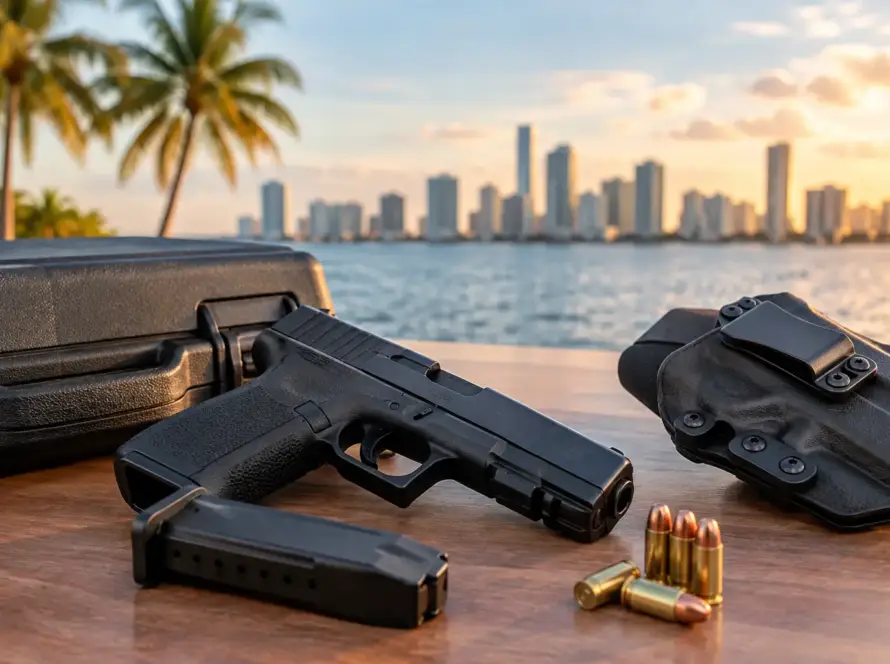
A holster that feels acceptable for five minutes at the counter can become a problem halfway through a workday. It may shift when you sit, print through a light shirt, rub against your skin, or make it difficult to keep the firearm consistently positioned. This concealed carry holster guide focuses on the details that matter after the purchase: secure retention, reliable coverage of the trigger guard, practical access, comfort, and safe carry habits.
The right choice is not simply the smallest holster or the lowest-profile option. It is the holster that fits your specific firearm, supports your normal clothing and routine, and allows you to carry responsibly without constant adjustment. A quality holster is core safety equipment, not an accessory to choose by appearance alone.
Start With Firearm-Specific Fit
A holster should be made for the exact firearm model you carry. Similar-looking handguns can have different trigger guard shapes, slide lengths, rail dimensions, sight heights, and controls. A loose universal holster may allow movement that compromises retention or leaves the trigger area insufficiently protected.
If your handgun has a weapon-mounted light, red-dot optic, threaded barrel, compensator, or extended controls, confirm that the holster is built for that configuration. Do not assume a standard model will fit safely after adding accessories. The same applies to aftermarket sights, which can catch during holstering if the holster does not provide adequate clearance.
The non-negotiable standard is full trigger guard coverage. The holster must prevent access to the trigger while the firearm is holstered. It should also retain the firearm securely during normal walking, bending, and sitting without requiring an overly difficult draw. Retention needs vary by carry method and activity level, but a firearm that shifts, loosens, or can fall free is not ready for daily carry.
Before carrying loaded, verify fit with the firearm unloaded and in a safe direction. Confirm that the holster fully seats the firearm, keeps the trigger guard covered, holds its shape, and does not interfere with normal controls. Follow the manufacturer’s instructions and have a qualified instructor or gunsmith inspect any setup you are unsure about.
Choose the Carry Position Before the Material
Many buyers start by comparing leather, Kydex, and hybrid designs. That matters, but carry position usually determines whether the holster will work with your daily life. Your build, wardrobe, vehicle time, work environment, and firearm size all affect the decision.
Inside-the-Waistband Carry
Inside-the-waistband, often called IWB, remains a common option because the holster rides inside the pants and reduces the firearm’s overall visible profile. It can work well with compact and subcompact handguns, especially when paired with a supportive belt and clothing with enough room at the waistband.
The trade-off is that IWB carry places the holster against the body. Sweat protection, smooth edges, adjustable ride height, and a stable belt clip become more important. A holster that lacks a sweat guard may be less comfortable and can expose the firearm to more perspiration. A sweat guard should not interfere with establishing a secure grip or reholstering safely.
Appendix IWB can offer good concealment and accessibility for some carriers, particularly in lighter clothing. It also requires disciplined holster selection and strict handling habits. The holster must be rigid, cover the trigger guard completely, and stay fixed in place. Never force the firearm into a holster, and avoid reholstering until clothing, drawstrings, shirt fabric, and other obstructions are fully clear.
Strong-Side IWB and Outside-the-Waistband Carry
Strong-side IWB, typically carried near the hip, is familiar to many shooters and can be comfortable for walking and standing. It may conceal well under an untucked shirt, jacket, or overshirt. People who drive long distances may find that placement more comfortable than appendix carry, although comfort is personal and should be tested safely.
Outside-the-waistband, or OWB, holsters often provide excellent stability and are easy to put on and remove. They are a strong option for range use, open carry where lawful, field use, or concealed carry under a substantial cover garment. The trade-off is concealment. A short shirt that rides up when reaching, sitting, or bending can expose the holster and firearm.
Pocket, Ankle, and Specialty Carry
Pocket holsters are designed to keep a small handgun oriented correctly, protect the trigger guard, and prevent the firearm from printing as clearly through the pocket. They should be used only with pants or shorts that have pockets large enough to safely accommodate the holster and firearm. A loose firearm in a pocket is not an acceptable substitute.
Ankle holsters, belly bands, shoulder holsters, and off-body bags have specialized uses, but each introduces limitations. Ankle carry can be slow to access and is generally best reserved for small, lightweight firearms. Belly bands must provide real trigger guard protection and stable retention, not merely fabric coverage. Off-body carry demands constant control of the bag and is generally less secure than keeping the firearm on your person.
Materials: Kydex, Leather, and Hybrid Designs
Kydex holsters are popular for their rigid construction, consistent trigger guard coverage, moisture resistance, and adjustable retention on many models. They typically keep their shape when empty, which can support safer, more deliberate reholstering. The potential drawback is comfort. Poorly finished edges or a badly matched design can create pressure points.
Leather can provide a traditional appearance and may become comfortable as it breaks in. Quality leather holsters should be properly reinforced so they do not collapse when the firearm is removed. Soft, worn, or poorly constructed leather can create an unsafe reholstering situation because the mouth of the holster may close or fold inward.
Hybrid holsters combine a rigid shell with a leather or synthetic backing. They can spread pressure over a larger area and improve comfort for some users. Check that the shell retains the firearm properly and that the backing does not allow the assembly to flex excessively. Comfort is valuable, but it should never come at the expense of trigger protection, secure mounting, or consistent access.
The Belt and Hardware Matter More Than Most Buyers Expect
A quality holster cannot perform well if it is mounted to a weak belt. Casual fashion belts often stretch, roll, or sag under the weight of a firearm, spare magazine, and other everyday items. That movement causes the holster to shift, affecting concealment, comfort, and consistent placement.
Use a purpose-built gun belt or a sufficiently stiff belt sized to the holster’s loops or clips. Look closely at clip design. Clips should attach securely to the belt and remain in place during normal movement. Some carriers prefer metal clips, while others value discreet polymer clips or tuckable hardware. There is no universal winner, but the hardware should match your belt, carry position, and clothing.
Ride height and cant also deserve attention. Ride height controls how deeply the firearm sits below the belt line. Cant changes its angle. Small adjustments can improve concealment and grip access, but extreme settings may reduce consistency. Make adjustments gradually, then test the setup through normal daily movement with an unloaded firearm before relying on it for carry.
Test a Holster Before Calling It Your Daily Setup
Do not judge a holster only by standing in front of a mirror. Wear it around the house with an unloaded firearm during ordinary tasks such as sitting at a desk, getting in and out of a vehicle, walking, bending, and reaching for common items. Check whether the holster stays anchored and whether your cover garment remains practical.
Pay attention to hot spots and repeated adjustment. Discomfort may be solved by changing the holster’s position, ride height, cant, belt, or clothing size. If the system remains uncomfortable, choose a different holster rather than accepting a setup that you will leave at home.
Concealment also means consistency. A holster should not require frequent touching, tugging, or repositioning in public. That behavior can draw more attention than a slight outline under clothing. Select realistic clothing for your climate and routine, not just a range-day outfit. In Florida and other warm-weather areas, lighter garments may favor slimmer firearms, low-profile clips, and carefully chosen carry positions.
Responsible Carry Requires More Than the Right Holster
A well-made holster supports safe carry, but it does not replace training, judgment, and legal awareness. Know the laws that apply where you live and travel, including restrictions for certain locations and any requirements related to licenses, transportation, or use of force. Laws change, so verify current rules through official state and local sources before carrying.
Practice should include safe handling, secure storage, and careful administrative handling at home. Store firearms in a manner that prevents unauthorized access, especially around children or guests. Keep your holster clean and inspect it regularly for cracked hardware, worn clips, loose screws, deformation, or material that no longer covers the trigger guard correctly.
Guns & Tactics customers should treat holster selection as part of a complete carry system: a correctly fitted holster, a stable belt, appropriate storage, and training that builds safe habits. Buy for the firearm you actually carry, the clothes you actually wear, and the conditions you actually face. The best holster is the one that stays secure, protects the trigger, and makes responsible daily carry sustainable.