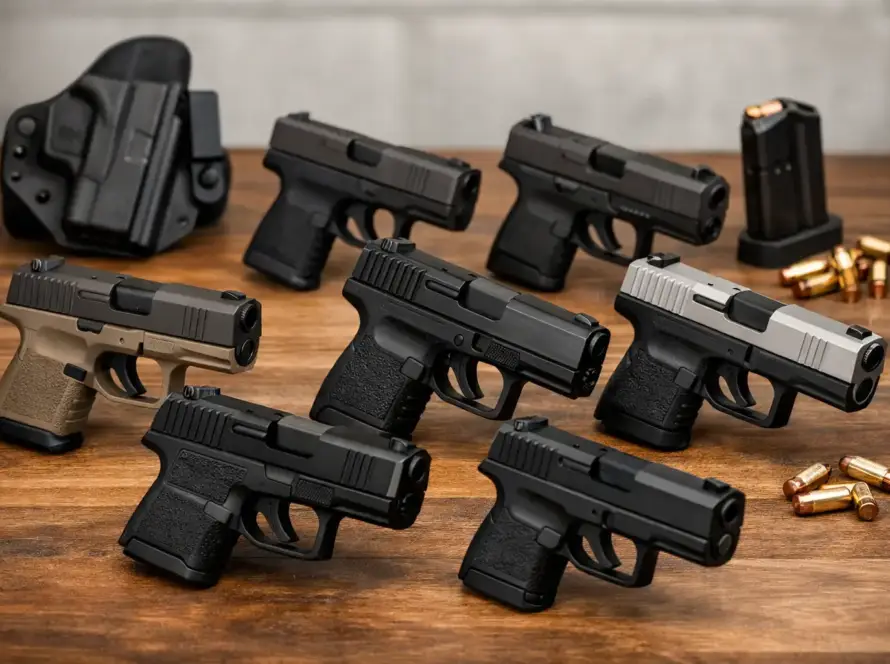
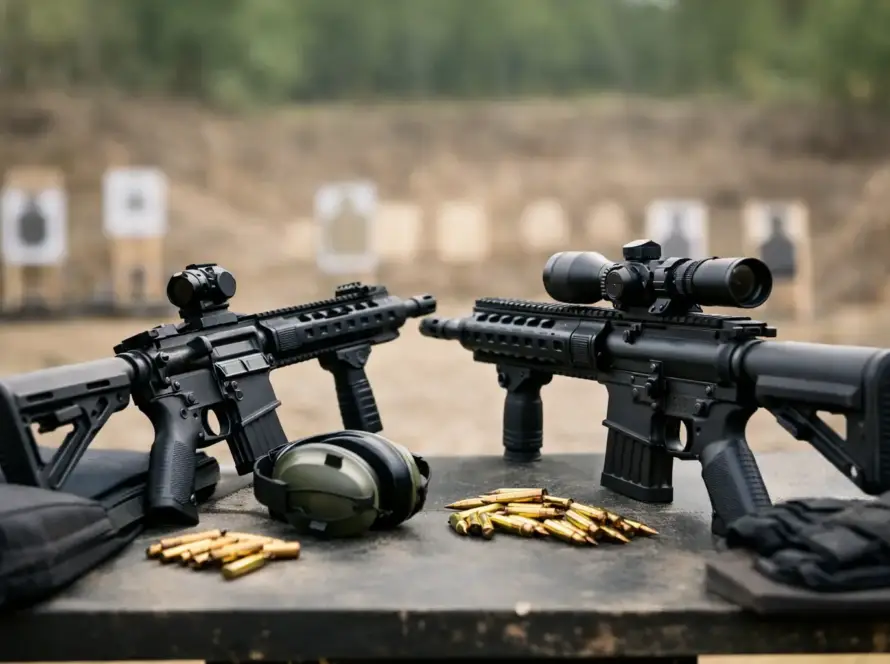
If you want the handgun with most accessories, you are really asking a platform question, not just a pistol question. The right answer is the handgun that gives you the widest support for holsters, magazines, optics cuts, lights, sights, replacement parts, and aftermarket upgrades without forcing you into odd compatibility issues later. For most buyers, that narrows the field fast.
What makes a handgun with most accessories?
A handgun earns that label when the aftermarket is deep, easy to shop, and built by more than one or two niche brands. That means you can find duty holsters, concealment holsters, spare mags, threaded barrels, night sights, red dot mounting options, mag wells, triggers, recoil assemblies, weapon lights, and cleaning gear without hunting across half the internet.
The other part is long-term platform support. A pistol can be popular for a year and still be a bad choice if accessory makers have not committed to it. Serious buyers should look for a handgun that has broad support across carry, home defense, range use, and tactical training. If the platform works across all four, accessory availability usually follows.
The handgun with most accessories is usually a Glock
For sheer aftermarket depth, Glock still leads the pack. The Glock 19 is the safest answer for most buyers, with the Glock 17 close behind. If your goal is maximum access to gear, parts, and upgrades, these two models sit at the top because nearly every major accessory maker builds around them first.
That matters more than brand loyalty. When a handgun becomes the default fit for holster companies, sight manufacturers, mag makers, and slide-cut shops, ownership gets easier. You can build a Glock 19 into a carry gun, nightstand gun, training gun, or suppressor-ready range setup without fighting the market.
The support runs deep in every category. Holsters are everywhere. Magazine options are broad. Sight upgrades are easy to source. Weapon light fitment is common. Red dot support is mature. Internal parts are simple to replace, and there is no shortage of triggers, slide releases, mag catches, barrels, and recoil parts.
That does not mean Glock is automatically the best shooter for every hand. It means it is the most supported platform, which is a different question and the one that matters if accessories are a top buying factor.
Why the Glock 19 stands out
The Glock 19 hits the sweet spot between size, capacity, and compatibility. It is small enough for carry, large enough for serious training, and common enough that most accessory lines are designed around it from day one. If you only want one handgun and plan to add gear over time, it is hard to beat.
It also benefits from cross-compatibility inside the Glock family. Many pouches, mag carriers, sights, and support items overlap with other double-stack 9mm Glock models. That makes future expansion easier if you later add another pistol in the same ecosystem.
Why the Glock 17 still matters
The Glock 17 gives you the same broad aftermarket with a full-size frame that some shooters prefer for duty use, home defense, and range work. The longer grip and sight radius can make it easier to shoot well, especially for newer owners or those with larger hands.
Its downside is simple – it is less convenient for concealed carry. If carry is not the primary role, the Glock 17 remains one of the strongest choices for anyone shopping for a handgun with most accessories.
Other strong contenders
Glock leads, but it is not alone. Several platforms now offer strong accessory support, especially if you want factory features that reduce the need for immediate upgrades.
Sig Sauer P320
The P320 has major aftermarket support and a strong modular design. Grip modules, slides, optics-ready variants, holsters, mags, and internal upgrades are widely available. Buyers who like the idea of changing frame size or setup without replacing the serialized core may find it more flexible than Glock.
The trade-off is that parts selection can get model-specific fast. Not every P320 slide, grip module, or holster works across every configuration. You need to pay attention when buying.
Sig Sauer P365 series
If the question is really about concealed carry, the P365 family deserves serious attention. The accessory market is deep, especially for optics-ready carry builds, lights, magazines, and holsters. The platform also offers multiple size variants, which helps buyers tailor the gun to specific carry needs.
Still, it is not the same kind of wide-open aftermarket as the Glock 19. It is more carry-focused than universal.
Smith & Wesson M&P 9
The M&P line has solid support in holsters, sights, lights, magazines, and optics-ready configurations. It is a practical option for buyers who shoot the platform better than Glock and still want broad gear availability. In duty and defensive circles, M&P support is proven and dependable.
The aftermarket is healthy, but not usually as deep or as cheap as Glock. That difference matters when you start stacking multiple upgrades.
Springfield Echelon and Hellcat
Springfield has gained ground, especially with optics-ready pistols. The Hellcat line has strong support for carry accessories, while the Echelon is building momentum in the full-size category. These are good options if you want modern factory features and a growing aftermarket.
The limitation is scale. You will find gear, but usually not in the same volume as Glock or the more established Sig platforms.
Accessory categories that matter most
When comparing any handgun with most accessories, look past the marketing and check the actual categories you plan to buy. A pistol may have plenty of cosmetic parts and still come up short where it counts.
Holsters are first. If you carry, train, or keep a pistol for home defense with a mounted light, holster support becomes critical. Light-bearing holsters are often where weaker platforms fall apart.
Magazines come next. Factory mags are ideal, but aftermarket availability and pouch compatibility also matter. A pistol is easier to live with when spare mags are common and reasonably priced.
Optics support is now a major factor. Optics-ready slides, direct mount systems, adapter plates, suppressor-height sights, and backup iron options all affect how easy it is to set up a red dot. Some platforms make this simple. Others turn it into a parts puzzle.
Lights and lasers matter if the handgun will serve in a home-defense or tactical role. The best-supported pistols fit popular lights without forcing odd rail adapters or custom holsters.
Then there are replacement and upgrade parts. Sights, barrels, trigger components, recoil springs, slide parts, and magazine extensions all add value when they are easy to source. A good platform lets you maintain the gun and tune it without waiting on rare parts.
Factory-ready versus aftermarket-built
Some buyers want a blank-slate pistol and plan to customize it heavily. Others want a handgun that shows up optics-ready, with usable sights, a good trigger, and strong factory mags right out of the box. That difference affects which platform makes the most sense.
Glock remains the best blank slate. It may not have every premium feature out of the box, but it gives you the most room to build exactly what you want. That is why it stays at the top of the handgun with most accessories conversation.
Sig, Smith & Wesson, and Springfield often offer more factory features in certain models. If you do not want to swap half the gun, those platforms can be a smarter buy. The trade-off is that your upgrade path may be narrower.
How to choose the right platform for your use
If you want one do-it-all handgun, buy around the Glock 19, Glock 17, or a comparable M&P or P320 depending on fit and intended use. If carry comes first, the P365 and Hellcat family deserve a look, but verify holster, light, and optic support before buying.
If you already know you will mount a red dot and weapon light, shop the accessory ecosystem before you shop the pistol. Make sure the exact model you want has proven support for your preferred optic footprint and light. Small model variations can change fitment fast.
It also pays to think about ammunition, magazines, cleaning supplies, and training gear as part of the purchase. The handgun is only the starting point. A well-supported platform saves money and frustration every time you add something later.
For most serious buyers, the answer is not complicated. If you want the handgun with most accessories, Glock still owns that lane, with the Glock 19 as the strongest overall pick and the Glock 17 close behind. Other platforms can be better for specific hands, roles, or feature preferences, but none match Glock for total accessory volume, compatibility, and ease of setup.
Buy the platform that fits your mission, not just your first range trip. The handgun is one purchase. The ecosystem around it is what keeps paying off.