Hogs do not give you much time to think. One second they are in the brush, the next they are crossing a sendero, breaking for cover, or piling out of a feeder in low light. That is why the best rifle for hog hunting is not just about raw power. It is about getting a rifle and caliber combination that fits your terrain, your shot distance, and how fast you may need a second shot.
What makes the best rifle for hog hunting?
A good hog rifle needs to do three things well. It has to hit hard enough to break shoulder and drive deep, it has to cycle fast enough for follow-up shots when the sounder scatters, and it has to carry well in the places hogs actually live. In open country, that may mean a flatter-shooting setup. In thick timber or over bait, that often means a shorter rifle that points fast.
This is where a lot of hunters get sideways. They look for one universal answer when hog hunting is full of trade-offs. A rifle that feels perfect in a blind at 120 yards may be slow and clumsy in palmettos or mesquite. A lightweight carbine that is excellent at 50 yards may give up some reach if you stretch the distance. The right choice depends on how you hunt more than what sounds impressive on paper.
Best rifle for hog hunting by platform
For most shooters, the real decision starts with action type. Bolt guns, AR-style rifles, and lever guns all work. They just solve different problems.
AR-15 and AR-10 rifles
For many hunters, an AR-style rifle is the most practical answer. Fast follow-up shots matter on hogs more than they do on most game, and a semi-auto gives you that advantage without breaking position. A good AR also gives you easy optic mounting, common magazine availability, and a lot of flexibility in barrel length and accessory setup.
An AR-15 chambered in 6.5 Grendel, .300 Blackout, or even a well-loaded 5.56 can be effective, though 5.56 is the most debated option. It can work with proper bullet selection and disciplined shot placement, but it leaves less margin on larger hogs, especially at bad angles. If you hunt mixed-size animals and want cleaner performance through shoulder, 6.5 Grendel usually makes more sense.
AR-10 rifles in .308 Winchester step up the authority. They hit hard, carry enough energy for larger boars, and stay useful from close brush to longer field edges. The downside is weight. A .308 AR with optic, loaded magazine, and light can get heavy fast, especially on foot.
Bolt-action rifles
If your shots are more deliberate and you are not expecting to engage multiple hogs in a few seconds, a bolt gun is still one of the best tools in the field. Bolt-actions are simple, reliable, and available in just about every useful hunting caliber. They also tend to offer strong accuracy without much setup.
A short-action bolt rifle in .308 Winchester, 6.5 Creedmoor, or .243 Winchester is a common choice. Of those, .308 remains the safest all-around pick for hogs. It handles a wide range of bullet weights, performs well on quartering shots, and gives you enough punch without being difficult to find or feed.
6.5 Creedmoor has better long-range manners, but hog hunting is rarely about stretching distance for the sake of it. If your average shot is under 200 yards, .308 usually gives you a little more confidence on bone and less concern about bullet performance at close to moderate range.
Lever-action rifles
Lever guns still earn their place, especially in thick country. A compact rifle in .30-30 Winchester, .45-70 Government, or .44 Magnum is quick to shoulder and easy to carry in brush or from a vehicle to a stand. At shorter distances, they hit hard and handle fast.
The limitation is obvious. You usually get less range, less optic flexibility depending on the rifle, and slower reloads than a modern semi-auto. If your hog hunting is close and fast, though, a lever gun can be a very solid choice.
The calibers that make the most sense
If you strip away brand loyalty and internet arguments, a few calibers keep showing up because they work.
.308 Winchester
If you want one of the safest recommendations for the best rifle for hog hunting, start here. .308 has the right balance of power, availability, and versatility. It performs on broadside shots, gives you enough penetration for heavier hogs, and is easy to source in quality hunting loads. It works well in bolt guns and AR-10 platforms, and it stays useful if you also hunt deer.
6.5 Grendel
This is one of the smartest choices for an AR-15 hog setup. It gives you more energy and better terminal performance than 5.56 while keeping the lighter AR-15 frame. For hunters who want a semi-auto without moving to the larger AR-10 pattern, 6.5 Grendel hits a sweet spot.
.300 Blackout
For short-range hunting, especially with a compact rifle or suppressed setup where legal, .300 Blackout is a strong option. It is at home inside 150 yards and handles short barrels well. It is not the best pick for open-country shots, but in brush, over bait, or at night, it is easy to like.
.30-30 Winchester
A classic that still works. Inside normal woods distances, .30-30 has enough authority for hogs and carries easily in a trim lever gun. If you prefer traditional rifles and hunt in thick cover, it remains relevant.
6.5 Creedmoor and .243 Winchester
Both can kill hogs cleanly, but they fit narrower use cases. 6.5 Creedmoor makes more sense when shots may run longer and you want a dual-purpose deer and hog rifle. .243 can work well with proper bullets, but many hunters still prefer a little more bullet weight and penetration when larger boars are on the menu.
Barrel length, optics, and setup matter more than people admit
A lot of rifle talk gets hung up on caliber while ignoring the rest of the system. For hog hunting, a 16-inch to 18-inch barrel is often the practical zone on semi-autos. It keeps the gun compact without giving up too much performance. On bolt guns, 18-inch to 20-inch barrels handle well and still provide plenty of velocity for common hog calibers.
Your optic should match your actual shot distance, not your ambitions. In heavy cover or around feeders, a red dot or low-power variable optic is usually the better tool. A 1-6x or 1-8x scope gives you speed up close and enough magnification for open lanes. If you mostly hunt fields, senderos, or powerline cuts, a 2-10x or 3-9x still makes sense.
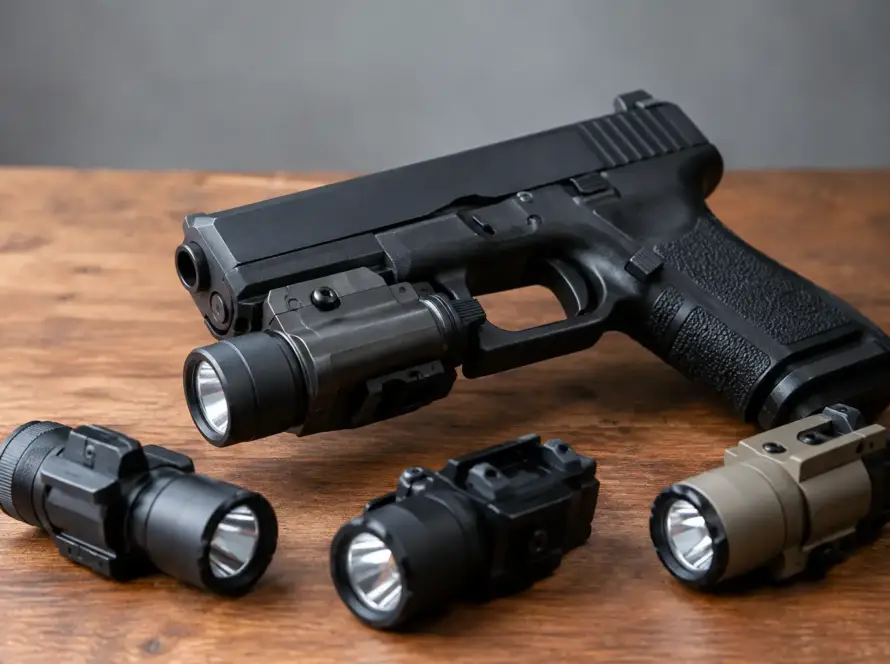
Weapon lights, thermal optics, and suppressors may also be part of the conversation depending on local law and how you hunt. The point is simple. The best hog rifle is not just a receiver and barrel. It is a complete field setup built around realistic conditions.
So what should most hunters buy?
If you want the short answer, most hunters will be well served by one of three paths.
A .308 bolt-action is the no-drama option. It is dependable, effective, and flexible enough for hogs, deer, and general hunting use.
A 6.5 Grendel AR-15 is a strong choice if you want quicker follow-up shots without jumping to a heavier .308 AR platform.
A .308 AR-10 is the harder-hitting semi-auto option if you expect bigger hogs, want more margin on tough angles, and do not mind extra weight.
The wrong move is buying too light because recoil scares you, or buying too heavy because energy charts look good online. Hogs are tough, but they are not magical. Use enough gun, run a bullet designed for hunting, and choose a rifle you can shoot fast and accurately under pressure.
A few buying mistakes to avoid
The first mistake is treating 5.56 as a universal answer. It can work, but only inside its limits. If hogs are your main target, there are better caliber choices.
The second is over-scoping the rifle. A big, heavy optic slows target acquisition and adds bulk where you do not need it.
The third is ignoring ammunition availability. The best setup is not much help if you cannot keep it fed or cannot find a load your rifle shoots well.
If you are building a hog rifle from scratch, think in complete terms – rifle, caliber, optic, magazine capacity, ammo choice, and the kind of land you actually hunt. That approach will get you closer to the best rifle for hog hunting than chasing trends or buying whatever someone calls the hardest hitter.
A practical hog rifle is one you can carry all evening, shoulder fast in bad light, and trust when the shot window is measured in seconds. Start there, and the rest of the decision gets a lot simpler.