Walk into any gun shop and ask for a pistol, and odds are the counter guy will show you a handgun. Ask for a handgun, and you may get shown pistols and revolvers side by side. So are handguns and pistols the same? In casual use, sometimes yes. In technical use, not exactly. That difference matters if you’re comparing platforms, shopping by category, or trying to match the right firearm to carry, range, or home defense use.
Are handguns and pistols the same in plain English?
The short answer is this: all pistols are handguns, but not all handguns are pistols.
A handgun is the broad category. It refers to any firearm designed to be fired with one hand. That includes semi-automatic pistols, revolvers, and in some contexts even specialty single-shot handguns used for hunting or target shooting.
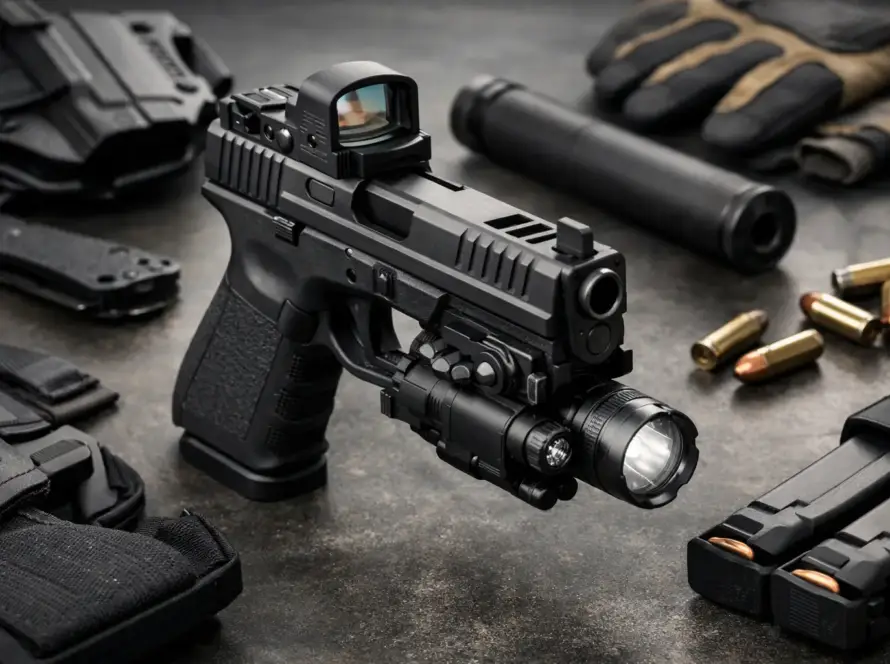
A pistol is a narrower term. In modern U.S. firearm retail and range talk, it usually means a handgun with a single chamber integrated into the barrel area, most often a semi-automatic design fed from a detachable magazine. If you’re looking at a Glock 19, Sig Sauer P320, Springfield Echelon, or Taurus G3C, you’re looking at pistols. They are also handguns.
Where people get tripped up is everyday language. A lot of shooters, manufacturers, and retailers use pistol as shorthand for handgun, especially when the product in question is clearly not a revolver. That isn’t always wrong, but it is less precise.
The practical difference between a handgun and a pistol
If you’re buying gear or sorting products by category, the broader term helps. Handgun can refer to the whole shelf. Pistol points to a specific type within that shelf.
Think of it this way. If someone says they carry a handgun, you still do not know whether it is a revolver or a semi-auto. If they say they carry a pistol, most shooters will assume a semi-automatic handgun unless they clarify otherwise.
That distinction matters when you’re shopping for magazines, holsters, optics-ready slides, night sights, or spare parts. A revolver and a semi-auto handgun fill similar roles in some cases, but they do not share the same operating system, reload method, or accessory fitment.
What counts as a handgun?
Handgun is the umbrella category. It generally includes semi-automatic pistols, revolvers, derringers, and other compact firearms built to be fired without a shoulder stock.
For most buyers, the two big subgroups are pistols and revolvers. That is the split you see in real-world shopping. If you’re browsing defensive firearms, that’s usually where the category breaks become useful. You are not choosing between abstract definitions. You are choosing between platform types with different controls, capacities, recoil profiles, and maintenance needs.
A revolver uses a rotating cylinder with multiple chambers. A pistol usually uses a fixed chamber and cycles ammunition from a magazine. Both are handguns. Only one is typically called a pistol.
What counts as a pistol?
In current U.S. usage, a pistol usually means a handgun designed around one chamber aligned with the barrel and fed by a magazine, often with a reciprocating slide in semi-automatic models. That’s why many product pages group Glock, Canik, FN, Smith & Wesson M&P, and similar models under pistols rather than just handguns.
There is some historical baggage here. Older firearm terminology sometimes used pistol more broadly. You may still see antique single-shot firearms or certain specialty handguns referred to as pistols. But for most modern buyers, pistol means semi-auto handgun.
That is also how many people talk at the range. If someone says bring your pistol mags, nobody expects speedloaders for a revolver.
Why the terms get used interchangeably
Part of the confusion comes from common speech. Most handguns sold for concealed carry, duty use, range training, and home defense today are semi-automatic pistols. Since pistols dominate the category, people often use handgun and pistol as if they mean the same thing.
Retail language plays a role too. Some stores use handgun as the top-level category and pistol as a filter. Others use pistol as the main category because that is what shoppers type into search bars. Neither approach is surprising. Search behavior is usually less technical than firearm design terminology.
Then there is legal and regulatory language, which can add another layer. Different statutes, agency definitions, and state-level rules do not always mirror casual gun-counter language. That means the exact term can matter depending on the context.
Are revolvers pistols?
This is where a lot of debates start.
In modern common usage, most shooters do not call revolvers pistols. They call them revolvers. That keeps things clear because the manual of arms, reload method, and internal function are different from a semi-auto pistol.
In some historical or legal contexts, revolvers may be grouped under broader pistol terminology. But if your goal is clarity when buying, carrying, training, or discussing defensive firearms, it makes more sense to separate the terms. Call a revolver a revolver. Call a semi-auto a pistol. Use handgun when referring to the whole category.
That is the cleanest way to avoid mistakes, especially if you’re ordering accessories or comparing models.
Why this matters when buying firearms and gear
If you’re shopping with precision, terminology saves time. It also keeps you from buying the wrong support gear.
A holster labeled for a handgun might still need model-specific fitment, but a product labeled for a pistol platform usually assumes semi-auto dimensions and controls. Magazine carriers, base pads, optic plates, recoil springs, and slide-mounted accessories are all tied to platform type. The more specific the language, the better your odds of getting the right gear the first time.
This also matters for new buyers comparing capacity, concealability, and intended use. If someone says handguns are best for concealed carry, that is too broad to be useful. A compact striker-fired pistol and a snub-nose revolver are both handguns, but they solve the problem differently. One may offer higher capacity and faster reloads. The other may offer simpler operation and pocket-friendly formats. It depends on your priorities, experience level, and training commitment.
Handgun vs. pistol in self-defense and range use
For self-defense, many buyers default to compact or full-size pistols because they are easier to reload, usually offer more onboard capacity, and often support lights, optics, and aftermarket upgrades. That does not make revolvers obsolete. It just means pistols tend to dominate current defensive setups.
For range use, the same pattern holds. Semi-auto pistols are often cheaper to train with over time because of magazine-fed operation and broad parts availability. They also offer more model variety in 9mm, which remains the center of the market for training and defense.
Still, revolvers retain strong appeal for certain shooters. Some prefer the trigger characteristics, the straightforward mechanical layout, or the role they fill for backup carry, trail use, or simple defensive storage. So when someone says they want a handgun, the follow-up question should be whether they mean a pistol or a revolver.
How to use the terms correctly
If you want the simplest rule, use handgun for the broad class and pistol for the semi-auto subset. That will make sense to most American gun owners, retailers, instructors, and range staff.
If you’re speaking casually, nobody is likely to stop the conversation because you used pistol where handgun might have been more exact. But if you’re shopping by category or discussing function, precision helps. It keeps your search cleaner and your expectations realistic.
A good example is product navigation. Search handgun safes if you want storage for multiple platform types. Search pistol magazines if you need feeding devices for a specific semi-auto. Search revolver holsters if that is the platform on your belt. Small wording differences can narrow your results fast.
The bottom line on whether handguns and pistols are the same
They overlap, but they are not identical terms. Handgun is the larger category. Pistol is one type of handgun, usually a semi-automatic one in modern use. If you remember that relationship, most gun-counter conversations and product categories will make sense right away.
For serious buyers, clear terminology is not about sounding technical. It is about getting the right firearm, the right accessories, and the right setup for the job. When you know what category you are actually shopping in, every next decision gets easier.