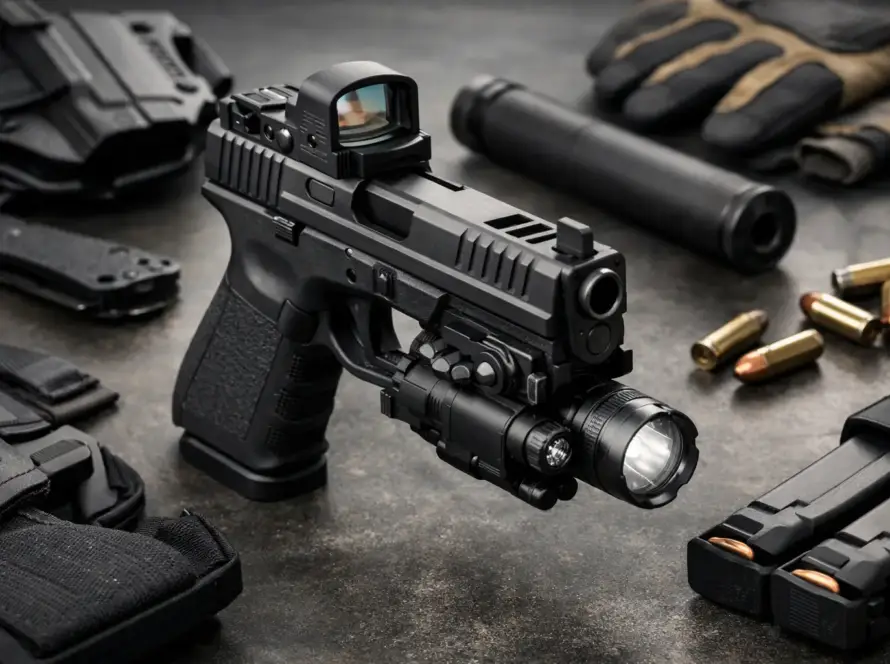
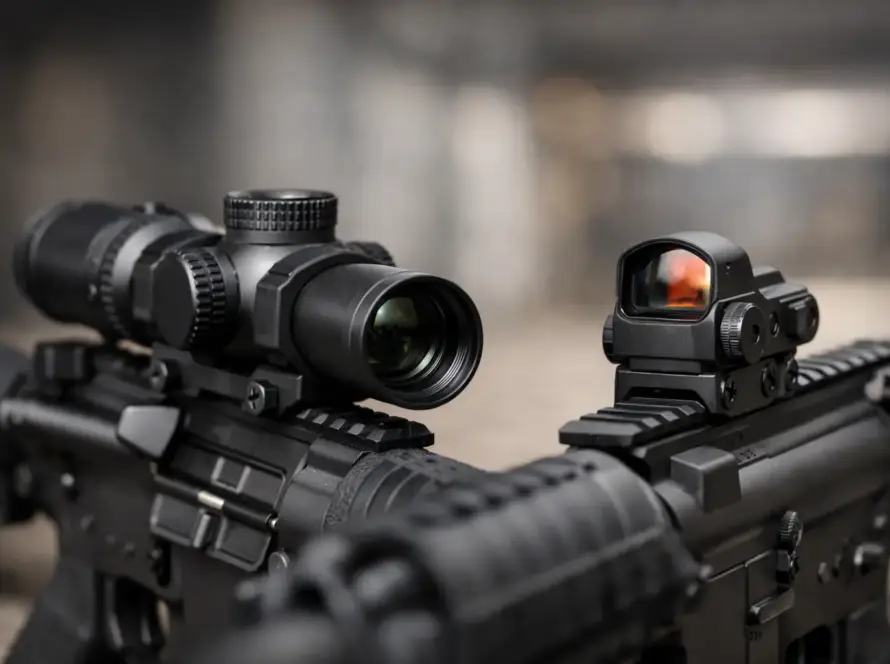
A buyer asking about handguns pistols and revolvers usually is not looking for theory. They want to know what fits their job, their carry setup, their training time, and their budget. That is the right place to start, because the best handgun is rarely the one with the most hype. It is the one you can run safely, shoot accurately, and support with the right magazines, holster, ammo, and maintenance gear.
For most shoppers, the real decision is not pistol versus revolver in the abstract. It is whether a semi-auto pistol or a revolver makes more sense for concealed carry, home defense, range work, or trail use. Both platforms are proven. Both have strengths. The trade-offs show up in capacity, recoil control, reload speed, simplicity, and how much training you are willing to put in.
Handguns pistols and revolvers – what separates them
A handgun is the broad category. Pistols and revolvers are the two main handgun types. A semi-auto pistol feeds from a magazine and cycles a new round with each shot. A revolver uses a rotating cylinder that holds the cartridges in individual chambers.
That mechanical difference affects nearly everything else. Pistols usually give you higher capacity, slimmer profiles for carry, and faster reloads. Revolvers offer straightforward operation, strong reliability with a wide range of loads, and a manual of arms that many shooters find easy to understand.
Neither design gets a free pass. Pistols can be easier to shoot well thanks to better capacity, lower bore axis in some models, and softer recoil in popular defensive calibers. They also require attention to magazine quality, slide operation, and malfunction clearing. Revolvers avoid some of those issues, but they often bring heavier trigger pulls, lower capacity, and more felt recoil in lightweight carry guns.
Semi-auto pistols for defense, carry, and range use
For a lot of American buyers, a striker-fired 9mm pistol is the default answer, and there are good reasons for that. The platform is efficient. You get practical capacity, manageable recoil, broad ammunition availability, and strong aftermarket support for sights, holsters, magazines, and weapon lights.
If your main use is concealed carry, compact and subcompact pistols dominate because they balance shootability with easier concealment. A micro-compact may disappear under light clothing, but smaller guns are less forgiving. Shorter grips, shorter sight radius, and snappier recoil can slow follow-up shots. Many buyers are better served by a compact pistol they can actually train with, not just hide.
For home defense, full-size and compact pistols both make sense. A larger frame usually gives better control, easier sight tracking, and accessory rail space for a light. Capacity matters here too. If the gun will live primarily by the bed or in a secured quick-access safe, a larger pistol can be the better working tool.
Range shooters often lean toward full-size pistols because they are easier to shoot for extended sessions. Weight helps. Grip length helps. Longer barrels can help with velocity and sight picture, though the practical difference is often smaller than marketing suggests.
Caliber still matters, but not in the old internet-forum way. For most defensive use, 9mm remains the smart center lane because it keeps ammo costs lower, recoil manageable, and magazine capacity strong. .40 S&W and .45 ACP still have their place, especially for shooters who already own those platforms, but they usually mean higher ammo cost, lower capacity, or more recoil. If you train a lot, that trade-off needs to be worth it.
Where revolvers still make sense
Revolvers are not outdated. They are specialized, and that is different. A good revolver still fills real roles in personal defense, backup carry, and field use.
For deep concealment or pocket carry, a small-frame revolver stays relevant because it can be simple to carry, resistant to lint and close-body conditions, and workable from awkward positions. A snag-free profile and enclosed or shrouded hammer can make practical carry easier. That said, these guns are not beginner guns just because they are simple mechanically. Lightweight revolvers can be hard to shoot well, especially with defensive loads.
For trail, woods, or animal-defense use, revolvers also hold ground because they can chamber powerful cartridges in durable platforms. If your handgun may need to handle hard-cast loads or magnum pressure, a revolver can be the better fit. That is less about nostalgia and more about application.
The main drawback is capacity and speed. Five or six rounds is not the same thing as ten, fifteen, or more in a semi-auto pistol. Reloading a revolver is also slower under stress, even with speedloaders or moon clips. If your priority is defensive efficiency with regular training, the pistol usually wins.
Choosing by use case, not by reputation
A lot of bad handgun purchases happen because buyers shop by image. The better move is to define the job first.
If you need an everyday carry gun, size and weight matter, but so does grip control. A carry pistol that hurts to train with usually becomes a safe queen. If you need a nightstand gun, capacity, a mounted light, and easy handling matter more than how thin the slide is. If you need a range gun, comfort and durability will do more for satisfaction than shaving half an inch off the barrel.
Revolvers fit buyers who want a straightforward defensive gun, a backup option, or a powerful field sidearm. Pistols fit buyers who want capacity, faster reloads, lower recoil in common configurations, and broader accessory support. Most shoppers deciding between the two are really deciding how much they value simplicity versus performance ceiling.
Accessories matter almost as much as the gun
Handguns pistols and revolvers do not operate in a vacuum. The platform is only part of the setup. The support gear often determines whether the gun is practical.
For pistols, spare magazines are not optional. Neither is a quality holster if the gun will be carried. Night sights or an optic-ready slide can make sense, but a reliable belt, safe storage solution, and regular practice ammo usually deserve the money first. Weapon lights are useful on home-defense pistols, but only if you train with them and understand target identification.
For revolvers, holster quality still matters, and speedloaders or strips matter if the gun has a defensive role. Grip choice matters more than many buyers expect. A grip that helps control recoil without printing excessively can change how usable a small revolver feels.
Cleaning and maintenance supplies are basic support items, not add-ons. A carry gun that collects sweat, lint, carbon, and old oil needs routine attention. Ammo selection matters too. Training ammo and defensive ammo do different jobs, and your chosen load should be tested in your firearm before it gets trusted.
Common buying mistakes
The first mistake is buying too small. Ultra-compact handguns sell for a reason, but many shooters perform better with a slightly larger pistol that gives a full grip and better recoil control. The second mistake is overbuying caliber. More power on paper does not help if it slows accurate follow-up shots or makes practice too expensive.
Another common problem is treating revolvers as maintenance-free or pistols as automatically complicated. Both platforms need inspection, cleaning, and function checks. Both need quality ammo. Both benefit from realistic range time.
A final mistake is shopping the firearm without shopping the total package. A good gun with no extra magazines, no carry method, and no training plan is an incomplete purchase. Serious owners know the platform, ammo, storage, and support gear all work together.
Which platform is right for most buyers?
For most first-time defensive handgun buyers, a compact 9mm semi-auto pistol is still the strongest all-around answer. It covers carry, home defense, and range use with fewer compromises than almost anything else. It also gives you the broadest selection of defensive loads, magazines, sights, and holsters.
For buyers who prefer mechanical simplicity, want a pocketable backup, or need a field gun for harder-hitting cartridges, a revolver still earns its place. It just helps to be honest about the learning curve. A double-action trigger and stout recoil in a small revolver demand practice.
At Guns & Tactics, the practical approach is simple: buy for the role, not the trend. The right handgun should fit your use case, your budget, and your training habits. If you match the platform to the job from the start, the rest of your setup gets a lot easier.