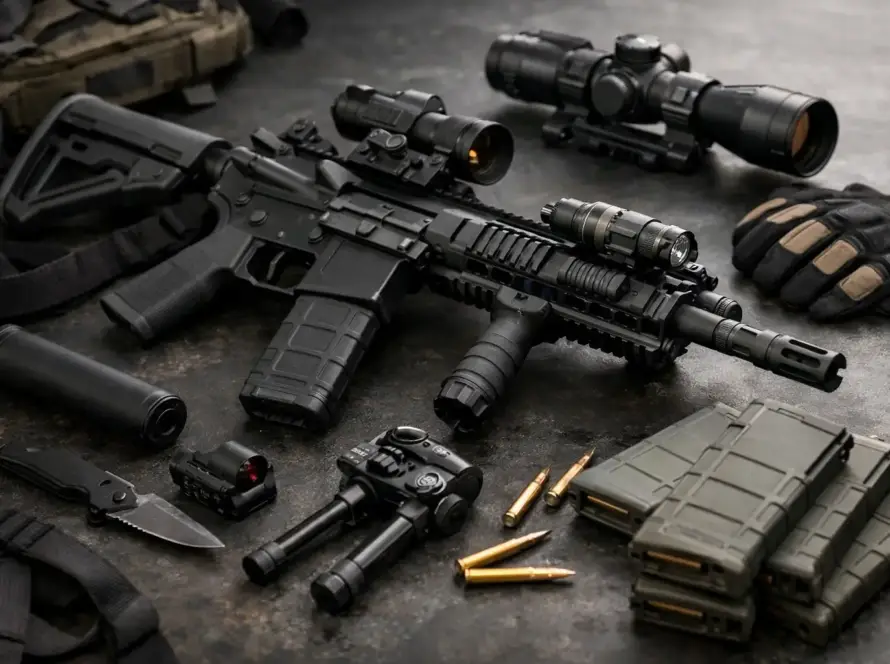
Puerto Rico firearms ownership requires more planning than a typical retail purchase on the mainland. The territory has its own firearms licensing and registration framework, while federal rules still govern dealer sales, prohibited persons, interstate transfers, airline travel, and many shipping decisions. Whether you are a resident buying your first handgun or a traveler transporting a firearm for a lawful purpose, paperwork and preparation come before equipment selection.
For customers comparing Puerto Rico firearms options, the practical goal is simple: work through the correct legal process first, then choose a reliable firearm, secure storage, ammunition, and range equipment that fit the intended use. Do not treat an online listing, an out-of-state permit, or a prior purchase in another jurisdiction as proof that a transaction or carry plan is lawful in Puerto Rico.
Puerto Rico Firearms Licensing Comes First
Puerto Rico’s firearms law generally requires a valid weapons license for the lawful acquisition, possession, and carry of firearms. The modern licensing structure consolidated several permissions that were formerly handled separately, but it still requires applicants to complete the required application process and receive approval before taking possession of a firearm.
Applicants should expect identity verification, eligibility screening, fingerprinting, required fees, and documentation. Requirements, forms, agency procedures, and processing timelines can change. Confirm current instructions directly with the Puerto Rico Police Bureau firearms licensing office before applying, especially if you have moved recently, have an out-of-state permit, or have any past criminal, protective-order, immigration, or mental-health-related issue that could affect eligibility.
Federal disqualifications still apply. A license or approval does not override federal restrictions on possession by prohibited persons. If there is any question about eligibility, get qualified legal guidance before submitting an application, attempting a transfer, or transporting a firearm.
Carry Authority Is Not a Reason to Cut Corners
A Puerto Rico weapons license may authorize concealed carry under applicable territorial law, but responsible carry begins with understanding the limits. Sensitive locations, government facilities, schools, secured airport areas, private property policies, and other restricted places can create serious legal exposure. The fact that a firearm is lawfully owned does not automatically make it lawful to carry in every setting.
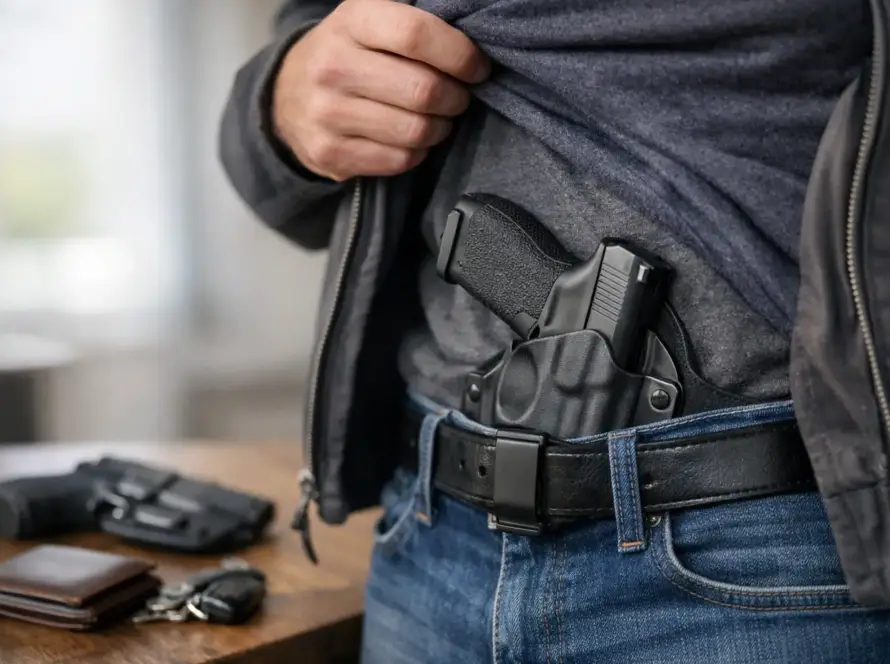
Treat carry gear as safety equipment, not an afterthought. A quality holster that covers the trigger guard, retains the firearm during normal movement, and supports consistent access matters more than a bargain option with a loose fit. Pair it with a sturdy belt, a practical cover garment, and regular training focused on safe handling, drawing, reholstering, judgment, and de-escalation.
Buying Firearms Through a Puerto Rico FFL
Firearms purchased from a dealer must be transferred through the appropriate licensed process. This applies whether the firearm is selected from a local dealer’s inventory or ordered from an online retailer. A firearm cannot simply be shipped to a buyer’s home because it was paid for online.
Before placing an order, contact the Puerto Rico Federal Firearms Licensee that will receive the firearm. Ask whether the dealer accepts outside transfers, what transfer fee applies, what documentation is required, and whether the specific firearm configuration can be transferred under current Puerto Rico law. Confirm the dealer’s current license information and provide it to the seller when requested.
This step prevents the most common avoidable problems: a firearm arriving at a dealer that does not accept transfers, incomplete paperwork, a mismatch between the buyer’s name and license records, or an order that cannot be completed under local requirements. A little verification is faster and less expensive than arranging a return shipment after the fact.
Private-party transfers deserve the same caution. Do not assume that a transaction that might be handled informally elsewhere is legal without a dealer or proper recordkeeping in Puerto Rico. Use the process required by current territorial law and keep documentation of every lawful acquisition and transfer.
Choose Equipment for the Actual Use
The right firearm depends on intended use, experience level, fit, and training access. A compact handgun can be convenient for lawful concealed carry but is often harder for a new shooter to control. A full-size handgun may be easier to shoot accurately and comfortably at the range, but it is less convenient to carry. For home defense, secure storage and a clear household access plan may matter as much as caliber or capacity.
Buy based on function, not internet pressure. Handle compliant models at a dealer or range when possible. Check grip fit, trigger reach, sight visibility, controllability, and the availability of magazines, holsters, cleaning supplies, and suitable ammunition. A firearm that fits the owner and can be practiced with regularly is usually the better long-term choice.
Traveling With Firearms to Puerto Rico
Air travel is where otherwise careful owners make preventable mistakes. Firearms must be unloaded, placed in a locked hard-sided case, and declared to the airline at the ticket counter. The locked firearm case should protect the firearm from access during transport, and the traveler should retain control of the key or combination. Airline rules can add restrictions on case design, ammunition packaging, checked-bag placement, weight limits, and declaration procedures.
Ammunition should be packed according to airline and federal transportation rules, typically in secure packaging designed to protect cartridges from movement and impact. Do not place loose ammunition in a bag. Do not bring a firearm, ammunition, magazines, or firearm components into a TSA checkpoint or carry-on bag.
Arriving in Puerto Rico does not erase the need to comply with Puerto Rico law. Before traveling, confirm that you may lawfully possess the firearm there, that your license or any claimed reciprocity is currently valid, and that the firearm’s configuration is permitted. Travelers should also know the lawful transport rules for the route between the airport, lodging, range, hunting area, or other destination.
Traveling by cruise ship or commercial vessel adds another layer. Cruise lines, ports, and destination operators may prohibit firearms or require advance arrangements that are stricter than general possession law. Never assume an airline procedure applies to a cruise terminal, charter vessel, rental vehicle, or hotel.
Secure Storage Is Part of Responsible Ownership
Puerto Rico’s climate creates a practical maintenance challenge. Salt air, heat, and humidity can accelerate corrosion, particularly on firearms stored in vehicles, garages, coastal properties, or soft cases. Wipe down metal surfaces after use, inspect magazines and ammunition periodically, and use appropriate cleaning and corrosion-control products. Avoid storing a firearm long-term in a foam-lined case that can hold moisture against the finish.
For home storage, choose a solution based on access needs and household risk. A quick-access lockbox can be appropriate for a defensive handgun that must remain secured from children, guests, and unauthorized adults. A full-size safe provides more room for long guns, ammunition, optics, documents, and accessories. Either choice should be anchored or positioned to reduce theft risk when practical.
Storage should also account for who lives in or visits the home. The safest setup keeps firearms inaccessible to anyone who is unauthorized, untrained, underage, or in crisis. Store firearms unloaded when they are not intended for immediate defensive access, and store ammunition separately when that arrangement fits the household’s safety plan.
Training Builds More Value Than Another Accessory
A lawful purchase is only the starting point. New owners benefit from a basic safety course before regular range use. Experienced owners benefit from refresher training, low-light instruction, malfunction work, medical preparedness, and scenario-based decision-making. Training helps identify equipment problems early, including poor holster fit, weak belt support, unreliable magazines, and sights that do not work for the shooter.
Keep range practice focused. Start with safe loading and unloading, muzzle discipline, trigger discipline, grip, sight alignment, and accurate shots at manageable distances. Speed should come after consistency. If a firearm is intended for defense, practice with the ammunition and accessories actually carried, then inspect the setup after each range session.
Before purchasing, carrying, or traveling with a firearm in Puerto Rico, verify the current rules with the appropriate licensing authority, receiving dealer, and transportation provider. The right paperwork, secure storage, and regular training make every equipment decision more useful – and far more responsible.