The cartridge stamped on the box matters less than the hits you can place under pressure. When buyers ask what caliber for self defense, the right answer is not simply the largest round available. It is the caliber and handgun combination you can carry consistently, operate confidently, and shoot accurately with quality defensive ammunition.
For most adult handgun owners, 9mm is the practical starting point. It offers manageable recoil, broad handgun selection, strong ammunition availability, and magazine capacity that works well for concealed carry, home defense, and regular range training. That does not make it the only valid choice. Hand size, physical limitations, carry method, recoil tolerance, and experience level can all point to a different answer.
What Caliber for Self Defense Is Most Practical?
Modern defensive handgun ammunition has narrowed many of the old performance gaps between common service calibers. With reputable, purpose-built defensive loads, 9mm, .40 S&W, and .45 ACP can all be viable choices in capable hands. The practical difference often comes down to recoil control, handgun size, capacity, follow-up shots, and the cost of training.
A defensive firearm is not a one-box purchase. The handgun, ammunition, holster, magazines, belt, safe storage, cleaning supplies, and range time all work together. A caliber that looks impressive on paper but discourages consistent practice is rarely the best long-term setup.
Why 9mm Is the Default Recommendation
9mm has earned its place as the standard recommendation because it balances the factors that matter to most shooters. Full-size, compact, and micro-compact 9mm pistols are widely available, making it easier to match the platform to home defense, duty use, or concealed carry. Ammunition choices are extensive, from economical training loads to quality defensive loads.
Recoil is generally manageable for new and experienced shooters alike, especially in compact and full-size pistols. Lower recoil helps shooters maintain a firm grip, recover their sights, and make controlled follow-up shots. It also makes it more realistic to practice often without excessive fatigue or ammunition expense.
Magazine capacity is another advantage. While capacity is never a substitute for safe handling and accurate shooting, a typical 9mm handgun commonly carries more rounds than a similarly sized .40 S&W or .45 ACP model. That gives 9mm a strong overall balance without demanding a large, hard-to-carry pistol.
When .380 ACP Makes Sense
.380 ACP can be a sensible option when concealment and handgun size are the deciding factors. Many .380 pistols are built for pocket carry or deep concealment, where a larger handgun may be left at home. A firearm you can safely carry every day is more useful than a larger one that stays in a drawer.
There is a trade-off. Small, lightweight .380 pistols can feel sharper in recoil than some buyers expect, and their short grip can make them harder to control. Ammunition capacity is often lower, and defensive ammunition selection should be chosen carefully. If possible, shoot the specific .380 model before buying it. Some shooters find a compact 9mm easier to shoot despite its larger caliber because the gun itself is bigger and easier to hold.
.38 Special and the Revolver Option
A .38 Special revolver remains a practical defensive choice for shooters who prefer a simple manual of arms. Revolvers can be dependable, easy to inspect for loaded status, and less sensitive to certain grip or cycling issues that can affect semi-automatic pistols. For some owners, especially those with reduced hand strength or a preference for a double-action trigger, that familiarity matters.
The trade-offs are real. Revolvers usually carry fewer rounds, reload more slowly, and can have heavier trigger pulls. Lightweight snub-nose revolvers are easy to conceal but can be challenging to shoot well. A medium-frame .38 Special revolver is often easier to control for home defense or range use, while a smaller model demands more deliberate practice.
.40 S&W and .45 ACP: Viable, but More Specialized
.40 S&W and .45 ACP remain capable defensive calibers. Many experienced shooters already own pistols chambered in one of these cartridges, shoot them well, and have no practical reason to change. Both have established defensive ammunition options and proven handgun platforms.
The reason they are less often recommended as a first choice is simple: they usually bring more recoil, less capacity, higher ammunition cost, or some combination of all three. .40 S&W can feel notably snappy in lighter compact pistols. .45 ACP often requires a larger grip and a heavier handgun, although compact .45 models exist.
If you can shoot either caliber accurately and are willing to train with it, they are legitimate choices. If you are buying your first defensive handgun, compare them side by side with 9mm at the range. Do not make the decision based on caliber reputation alone.
Match the Caliber to the Gun and the Mission
The best answer to what caliber for self defense changes with how the handgun will be used. A home-defense pistol can be larger, heavier, and easier to shoot because concealment is not the priority. A concealed-carry pistol must fit your clothing, holster, and daily routine. A firearm intended for both range practice and protection should be affordable enough to shoot regularly.
A full-size 9mm pistol is often the easiest platform for a new shooter to learn on. Its longer grip and added weight usually help manage recoil. A compact 9mm is a strong all-purpose option for owners who want one handgun for carry, home defense, and training. Micro-compacts are highly convenient to carry but require more attention to grip, trigger control, and recoil management.
Do not overlook fit. You should be able to reach the trigger without shifting your grip excessively, operate the controls safely, and rack the slide with confidence. A handgun that fits poorly will be harder to shoot well regardless of caliber.
Ammunition Choice Matters as Much as Caliber
The caliber is only one piece of the equation. Use reputable factory ammunition designed for personal defense in the handgun you plan to carry or stage for protection. Before relying on any defensive load, confirm that it functions reliably in your firearm. That means testing it at the range, not assuming every load will perform the same in every pistol.
Training ammunition and defensive ammunition serve different roles. Practice ammunition is generally selected for affordability and consistent range use. Defensive ammunition is selected for reliability and performance in its intended role. Train enough with your carry gun to understand its recoil, point of impact, and handling characteristics, then verify your chosen defensive load functions without issue.
Avoid mixing random loose rounds, unknown reloads, or damaged ammunition into a defensive setup. Keep ammunition dry, organized, and inspected. Replace ammunition that shows corrosion, damaged cases, or questionable condition.
Recoil Control Beats Caliber Pride
A larger caliber does not compensate for poor grip, weak fundamentals, or infrequent training. The goal is controlled, accountable shooting. Choose a handgun you can keep on target, shoot accurately at realistic defensive distances, and operate safely under stress.
For many shooters, that means 9mm. For others, a .380 ACP that they will actually carry, a .38 Special revolver they can operate confidently, or an existing .45 ACP they already train with may be the better answer. The right choice is personal, but it should be based on performance rather than internet arguments.
If you are undecided, rent or borrow several well-maintained handguns in 9mm, .380 ACP, .38 Special, .40 S&W, and .45 ACP where possible. Compare grip fit, trigger reach, recoil recovery, loading, unloading, and accuracy. A qualified instructor can help identify issues that are difficult to notice on your own.
Build a Defensive Setup You Will Maintain
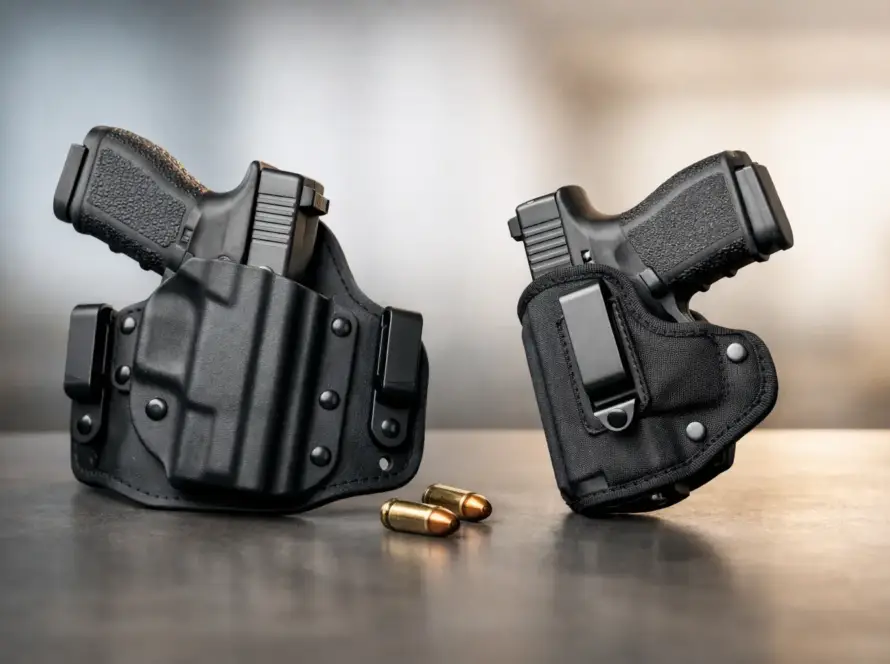
Your caliber decision should support a complete, responsible system. Store firearms securely from unauthorized users. Use a quality holster that protects the trigger guard and keeps the handgun in place. Carry spare magazines or speedloaders when appropriate, maintain the firearm according to the manufacturer’s guidance, and learn the self-defense laws that apply where you live.
Most importantly, train with the equipment you choose. A dependable handgun in a manageable caliber, paired with quality ammunition and regular practice, is a far better defensive tool than a harder-shooting option chosen only for its reputation. Pick the caliber that keeps you confident, controlled, and committed to training.