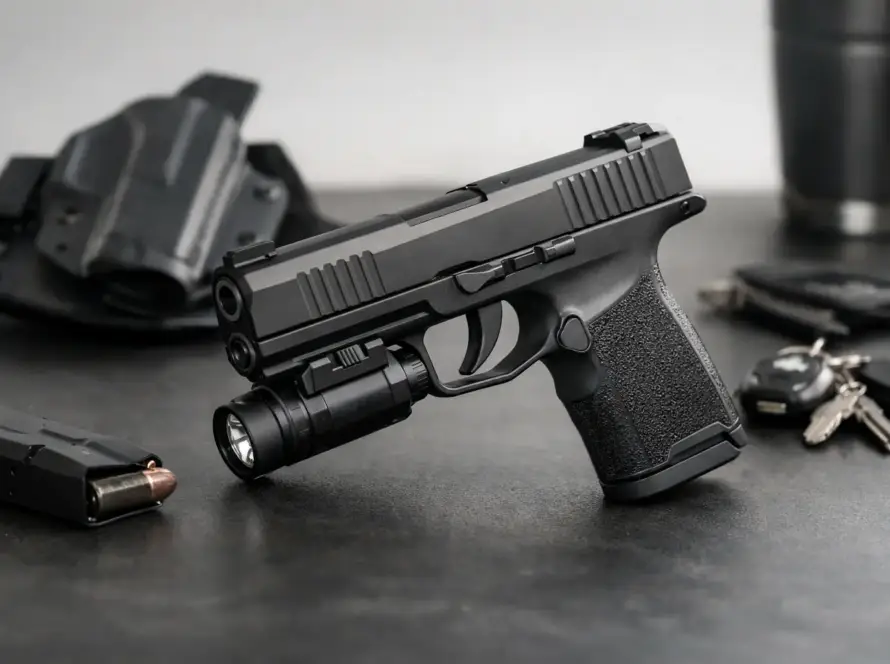
A pistol that looks great in the case can be the wrong tool once the lights are low, your hands are moving fast, and you need a clean, simple defensive setup. If you are shopping for the best pistol for home defense, the real question is not which handgun gets the most hype. It is which one gives you the best mix of reliability, controllability, capacity, and ease of use inside your own home.
What matters most in the best pistol for home defense
For home defense, full-size and compact 9mm pistols usually make the most sense. They are easier to control than micro-compacts, easier to stage with a weapon light than many subcompacts, and they give you enough magazine capacity without making recoil management harder than it needs to be.
That is why the best pistol for home defense is often not the smallest handgun on the shelf. Small pistols are great for concealed carry, but a home-defense gun has a different job. You want a pistol that points naturally, runs reliably, handles recoil well, and gives you enough rail space and slide footprint for useful upgrades.
Reliability comes first. If a pistol has a solid track record, strong magazine support, and broad ammunition compatibility, it starts in a better place than a flashy model with mixed reviews. After that, look at shootability. A gun that lets you get fast, accurate follow-up shots is a better defensive choice than one that feels powerful but slow.
Size, caliber, and capacity
Most buyers land on 9mm for good reason. Modern defensive 9mm loads perform well, recoil is manageable for most shooters, and magazine capacity is typically better than .40 S&W or .45 ACP in similarly sized pistols. For many households, that makes 9mm the practical default.
A full-size pistol gives you a longer sight radius, more weight out front, and a larger grip. That usually translates to better control. A compact pistol gives up a little size while staying easy to shoot. For many people, compact is the sweet spot because it balances bedside use, range training, and possible future carry use.
Capacity matters, but it should not override handling. A 15 to 20-round magazine is useful. Still, a pistol that fits your hands and lets you shoot accurately is worth more than a few extra rounds in a platform you do not control well.
Features worth paying for
A rail for a weapon-mounted light is close to mandatory for a serious home-defense setup. You need to identify what is in front of you before making any decision. A pistol without a rail limits your options right away.
Optics-ready slides are also worth strong consideration. A red dot can speed up target acquisition and help shooters who struggle with iron sights under pressure. It is not required, but if you are buying now, an optics-ready model gives you more room to build the gun the way you want later.
Night sights can help in low light, but they do not replace a white light. They are a support feature, not the main event. The same goes for aggressive slide cuts or oversized controls. Nice to have, but not as important as reliability, light compatibility, and a trigger you can run consistently.
Best pistol for home defense by platform type
Full-size striker-fired pistols
This is the category that fits most buyers best. Pistols like the Glock 17, Sig Sauer P320 Full-Size, Springfield Armory Echelon, Smith & Wesson M&P 2.0 Full Size, and Canik TP9 or Mete full-size models all bring the core features most home-defense buyers need. They offer good capacity, solid recoil control, accessory rails, and broad aftermarket support.
The advantage here is simplicity. Striker-fired pistols are easy to operate, generally easy to maintain, and widely supported for magazines, lights, holsters, and optics plates. For a buyer who wants one dependable handgun for defense and regular range work, this category is hard to beat.
The trade-off is size. A full-size pistol is excellent at home, but less flexible if you later want to use the same gun for daily carry.
Compact striker-fired pistols
Compact models such as the Glock 19, Sig Sauer P320 Compact, Springfield Hellcat Pro, Taurus G3C or larger G3 variants, and Smith & Wesson M&P 2.0 Compact are strong options when you want one handgun that can cover more than one role. They are still large enough to shoot well, but easier to store, move with, and potentially carry.
For many experienced gun owners, the Glock 19-sized format remains the benchmark. It is not the biggest, not the smallest, and that is the point. A good compact 9mm often gives you enough grip, enough capacity, and enough control without becoming bulky.
The trade-off is that some compact guns can feel snappier than full-size models, especially with hotter defensive loads. That is not a deal-breaker, but it matters if multiple people in the home may need to use the gun.
Hammer-fired pistols
If you prefer a traditional double-action/single-action setup, pistols from Beretta, CZ, and Sig Sauer still deserve a hard look. A Beretta 92-series or CZ P-07 or P-09 can be excellent for home defense. These pistols often shoot very smoothly and give some users extra confidence with a heavier first trigger pull.
The downside is more complexity. Manual safeties, decockers, and longer first-pull mechanics are not a problem if you train with them. They can be a problem if you do not. For many buyers, striker-fired simplicity wins. For others, a hammer gun simply feels better in hand and on target.
Specific models that stand out
The Glock 17 remains one of the safest recommendations in this space because it is proven, simple, and easy to support with magazines, lights, and replacement parts. If you want a slightly more flexible size, the Glock 19 is still one of the strongest all-around answers.
The Smith & Wesson M&P 2.0 line deserves equal consideration. The ergonomics are strong, the grip texture is solid, and many shooters prefer its feel over Glock. Springfield Armory’s Echelon has also earned attention because of its optics-ready design, modern feature set, and strong out-of-box value.
If value is a major factor, Canik pistols continue to offer a lot for the money. Good triggers, optics-ready configurations, and usable sights make them attractive to buyers who want features without jumping into higher price tiers. Taurus can also make sense for budget-driven buyers, but this is one category where saving a little up front should never come at the cost of trust in the platform.
Sig Sauer’s P320 and P365-family variants also deserve mention, though the smaller P365 models are generally better suited to carry than dedicated home-defense use. If you are building a pistol mainly for the nightstand, a larger P320 or macro-sized gun usually makes more sense than a micro-compact.
The setup matters as much as the pistol
The pistol alone is only part of the equation. A quality defensive setup includes a dependable weapon light, tested defensive ammunition, spare magazines, and secure storage that still allows fast access. If the gun sits loaded with bargain ammunition, no light, and no training behind it, even a top-tier pistol is being underused.
You also need to verify reliability with your chosen carry or defensive load. Not every pistol likes every hollow point equally. Run enough rounds to confirm function, then keep the gun clean and the magazines in good shape.
A red dot can be a real upgrade if you train with it. So can a better set of iron sights. What usually does not help is bolting on every accessory available. Keep the gun practical. Light, reliable magazine supply, usable sights, and a consistent trigger press matter more than cosmetic add-ons.
How to choose the right one for your home
If this is a dedicated home-defense handgun, start with a full-size or compact 9mm from a proven manufacturer. Make sure it has a rail. If possible, choose an optics-ready version. Then handle it with a realistic grip, not just a casual one at the counter. You should be able to reach the trigger cleanly, operate the controls without shifting too much, and recover the sights quickly.
If more than one adult in the house may need to use it, fit matters even more. A pistol that works well for one experienced shooter may be a poor choice for someone with less hand strength or less range time. Shared-use guns should lean toward softer recoil, simpler controls, and clear sighting systems.
For buyers who want the shortest list possible, the safest starting point is this: Glock 17, Glock 19, Smith & Wesson M&P 2.0, Springfield Echelon, or a comparable Sig Sauer or Canik full-size or compact 9mm. That gives you a proven lane with plenty of magazine, ammo, and accessory support.
The best pistol for home defense is the one you can run confidently in low light, under pressure, with gear that supports the mission instead of complicating it. Buy for reliability first, add only what improves performance, and make sure your setup gets real range time before you trust it at bedside.