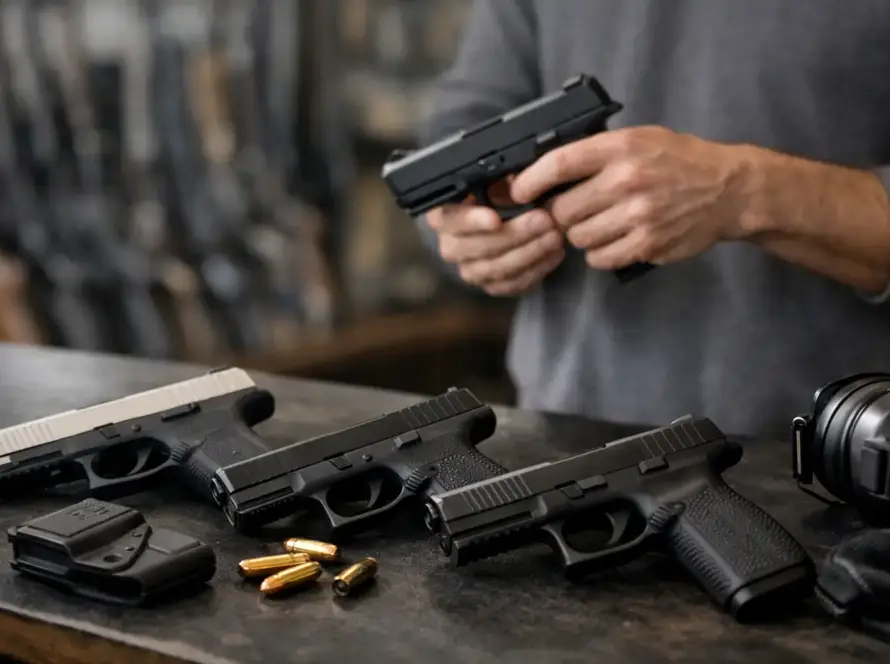
A firearm left loose under a truck seat, in a center console, or buried beneath range gear creates problems before the vehicle ever moves. Safe firearm transport starts with a simple standard: keep the firearm unloaded, secured in an appropriate case or container, inaccessible to unauthorized people, and carried in a manner that complies with the laws where you are traveling.
That standard applies whether you are headed to the range for an hour, driving to a hunting property, taking a firearm to a gunsmith, or crossing state lines. The gear matters, but consistent handling and a legal check before departure matter just as much.
What Safe Firearm Transport Looks Like
Transport is not the same as carrying a firearm for immediate defensive use. Rules for loaded firearms, accessible firearms, concealed carry, and vehicle storage can differ by state, local jurisdiction, destination, and method of travel. Do not assume the rules that apply at home apply everywhere else.
For routine range and hunting trips, the practical baseline is straightforward. Verify the firearm is unloaded in a safe direction. Remove ammunition from the firearm. Place the firearm in a case that protects it from damage and limits access. Store ammunition separately when required by law, airline policy, or the rules of the location you are visiting.
A brief chamber check is part of the process, not an optional extra. Remove the magazine where applicable, open the action, and visually and physically inspect the chamber according to the firearm’s design and your training. Then place the firearm directly into its case rather than setting it down while you organize other equipment.
For handguns, a lockable hard case or a purpose-built vehicle lockbox is often the most practical option. For rifles and shotguns, a fitted soft case may work for a direct trip to the range, while a lockable hard case offers better impact protection and stronger security for longer travel. The right choice depends on the firearm, vehicle, route, and how long the firearm may be unattended.
Choose Transport Cases for the Actual Trip
A case is not just packaging. It should protect the firearm from impact, keep it from shifting, and provide a reasonable barrier against unauthorized access. Buying the cheapest case available can create a poor fit, inadequate padding, weak hardware, or little protection during travel.
Soft cases are lighter, easier to carry, and useful for local range trips. Look for sufficient padding, durable zippers, reinforced handles, and an exterior pocket that keeps eye and ear protection, chamber flags, or cleaning supplies organized. A soft case is convenient, but it is not the best answer when the firearm will be checked as baggage, left in a vehicle, or exposed to hard use.
Hard cases provide more protection for optics, mounted accessories, and precision firearms. Models with foam interiors can reduce movement during transport, while lockable hasps add another layer of security. A hard case should fit the firearm without forcing pressure on an optic, sling mount, or muzzle device. Oversized cases are not automatically better if the firearm can slide freely inside.
For a handgun stored in a vehicle, a compact lockbox that can be secured to a seat frame or other fixed anchor is often more useful than hiding it in a glove box or console. Concealment alone is not security. A visible, portable case can attract theft, while an unsecured firearm can become accessible to a child, passenger, or thief in seconds.
Safe Firearm Transport in a Vehicle
Before loading the vehicle, place the cased firearm where it will not shift during braking or turns. In an SUV or truck, secure it so it cannot slide across the cargo area. In a sedan, the trunk is usually the most sensible location for a cased firearm when permitted by applicable law. Avoid leaving firearms on seats, floorboards, door pockets, or other obvious locations.
Plan the trip so you do not make unnecessary stops with firearms in the vehicle. If a stop is unavoidable, lock the vehicle and keep the firearm out of plain view. A vehicle is not a long-term storage solution. Heat, humidity, theft risk, and unauthorized access all increase when a firearm remains in a car for extended periods.
Be especially deliberate when transporting firearms with children or other passengers. A locked case and controlled access are not substitutes for direct supervision and responsible storage habits. If another person will use the vehicle, make sure they cannot access the firearm unless they are legally permitted and you intend for them to have access.
A practical departure routine can prevent most avoidable mistakes:
- Confirm the firearm is unloaded and the chamber has been checked.
- Case and secure the firearm before loading it into the vehicle.
- Keep ammunition organized and separate when required or appropriate.
- Verify the route, destination rules, and any state or local restrictions that may apply.
- Remove the firearm from the vehicle promptly when you arrive home or reach secure storage.
Know the Rules Before Crossing a State Line
Firearm laws are not uniform across the United States. Requirements can change based on the state, whether the firearm is a handgun or long gun, how it is stored, whether it is loaded, and whether the owner holds a carry license recognized at the destination. Some jurisdictions also regulate magazine capacity, certain firearm configurations, and the transportation of ammunition.
Federal protections may apply to certain interstate transportation situations, but they do not eliminate the need to understand state and local rules. Routes through restrictive jurisdictions, extended stops, overnight stays, and possession outside the vehicle can all affect the analysis. If your travel includes multiple states, review the laws for every state on the route, not only the final destination.
Florida firearm owners should also avoid relying on old advice from friends, social media posts, or outdated forum discussions. Laws and interpretations can change. Check current official state resources, destination rules, and any range, event, or property policies before you leave. When the stakes are high or the situation is unusual, qualified legal guidance is the right resource.
Flying With Firearms Requires More Preparation
Air travel has its own process. Firearms generally must be unloaded, secured in a locked hard-sided case, declared to the airline during check-in, and packed according to the airline’s current policies. Do not treat a soft range bag as airline-ready simply because it has a small lockable zipper.
Airlines may have rules on ammunition packaging, weight limits, lock types, and where ammunition may be packed. Airport procedures can also vary. Arrive early, keep the firearm case accessible for declaration, and do not handle the firearm except as directed by authorized airline or security personnel. Review current airline and transportation authority requirements before packing, because policies can change.
Your destination still controls once you land. A firearm that was properly checked for a flight may still be restricted at the destination, so legal research belongs in the travel plan from the beginning.
Maintain the Firearm Before and After Transport
Transport can expose firearms to moisture, dust, temperature swings, and impacts. Before leaving, confirm that screws, optic mounts, slings, and case hardware are secure. If you are transporting a firearm after a wet hunting trip or range session, unload it, inspect it, and clean and dry it before placing it into long-term storage.
Avoid sealing a wet firearm in a foam-lined case for days. Foam can retain moisture, especially in humid conditions, and that can contribute to corrosion. For longer storage, use a secure storage solution designed for the purpose rather than relying on a transport case alone.
A dependable setup is usually simple: a quality case matched to the firearm, a vehicle lockbox when needed, basic maintenance supplies, and a disciplined pre-trip check. Guns & Tactics offers transport cases, locks, storage options, and range-ready accessories selected for responsible owners who expect their equipment to perform.
The best time to solve a transport problem is before the engine starts. Build the same unload, case, secure, and verify routine into every trip, and safe handling becomes the part of firearm ownership you never have to second-guess.