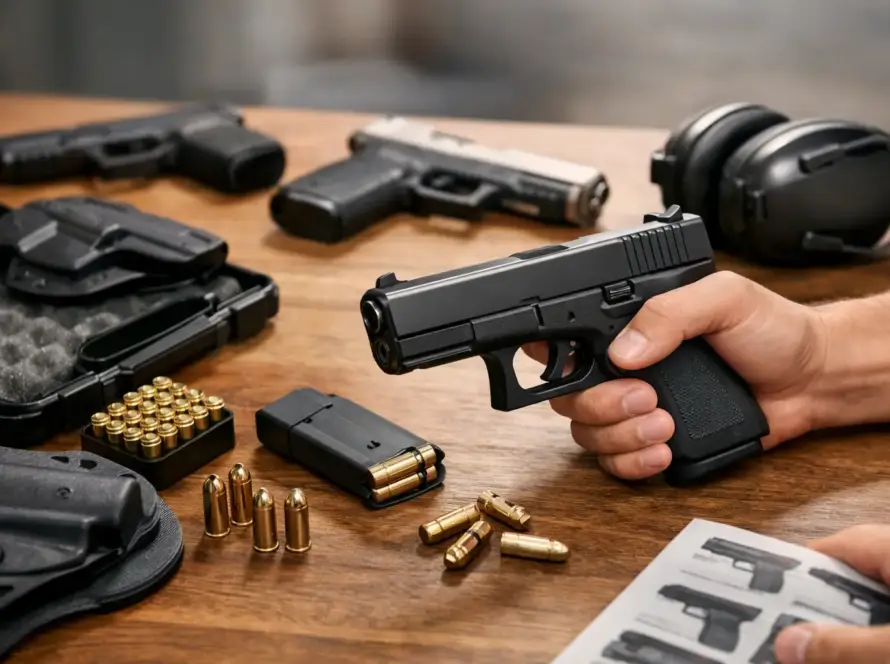
A cheap range setup becomes expensive fast when it causes malfunctions, forces repeat purchases, or leaves out safety gear. The best budget 9mm range setup is not the lowest-priced pistol in the case. It is a dependable, easy-to-run package that lets you spend more time training and less time troubleshooting equipment.
For most shooters, the priority order is simple: a proven 9mm handgun, quality eye and ear protection, enough magazines to keep a range session moving, reliable ammunition, and the basic gear to maintain it. Buy the core equipment first. Add upgrades only after you have enough trigger time to know what will actually improve your range experience.
Start With a Reliable Budget 9mm Pistol
A range pistol needs to run consistently, fit your hand reasonably well, and have magazines that are easy to find. That matters more than a flashy finish, an oversized accessory package, or a long list of factory features you may never use.
Full-size and compact 9mm pistols are generally the best values for regular range use. A full-size handgun offers a longer grip, a greater sight radius, and often softer perceived recoil. A compact model is easier to store, transport, and potentially use for lawful concealed carry, but its shorter grip can be less comfortable during longer sessions. Either can work. Choose based on how you plan to use the firearm beyond the firing line.
Budget-minded shoppers should look at established striker-fired platforms from manufacturers such as Glock, Canik, Springfield Armory, Smith & Wesson, Taurus, and SIG Sauer. The right pick depends on fit, local availability, included magazines, and the cost of magazines and replacement parts. A lower sticker price is less meaningful if every extra magazine costs a premium.
Before buying, handle the unloaded pistol at a dealer if possible. Check whether you can reach the trigger and magazine release without shifting your grip excessively. Confirm that the controls are easy to operate and that the sights are clear to your eye. If the gun does not fit, a bargain price will not fix it.
Avoid spending your whole budget on the handgun
The pistol is the center of the setup, but it is not the whole setup. Setting aside money for ammunition, safety equipment, magazines, and a case creates a better first-day purchase than putting every dollar into a higher-tier handgun with no supporting gear.
Also account for applicable transfer requirements, taxes, range fees, and any local rules. Firearm laws and retailer requirements vary by location, so verify the process before you order.
The Best Budget 9mm Range Setup: Buy Safety Gear First
Eye and ear protection are non-negotiable range equipment. They are not the place to chase the absolute lowest price. Look for impact-rated shooting glasses with clear lenses for indoor or low-light ranges. If you shoot outdoors in bright sun, a second tinted lens option can be useful, but clear protection should come first.
For hearing protection, electronic earmuffs offer strong value because they reduce gunfire while allowing normal conversation and range commands to be heard. That makes them especially useful for newer shooters, classes, and busy public ranges. Basic passive earmuffs cost less and work well, though communication is more difficult.
If a range is loud or you are shooting in an enclosed bay, double up with foam earplugs under earmuffs. It is an inexpensive layer of protection that can make extended practice more comfortable.
Your core safety kit should also include a small first-aid kit, a basic trauma kit appropriate to your training level, and a tourniquet from a reputable manufacturer. Keep it accessible in your range bag, not buried under loose ammunition. Every shooter should know the range rules, know where the facility’s medical supplies are located, and have a plan to summon help in an emergency.
Magazines Keep Training Moving
Two magazines can get you started. Three to five magazines make a range day far more efficient. Instead of stopping to reload after every string, you can load several magazines at the bench and spend your lane time practicing with purpose.
Stick with factory magazines or well-regarded aftermarket options made specifically for your pistol. Bargain magazines are a common source of feeding problems, inconsistent lockback, and wasted range time. Saving a few dollars is not worth diagnosing an issue that disappears as soon as you install a quality magazine.
A simple magazine loader is one of the most practical low-cost additions to a 9mm setup. It reduces thumb fatigue, speeds up loading, and makes it easier to finish a session without rushing. For high-volume shooters, it quickly earns its place in the bag.
Choose Ammunition for Consistency, Not Hype
For routine range use, standard-pressure full metal jacket 9mm ammunition is the practical choice. It is designed for training, widely available, and typically less expensive than premium defensive loads. Buy reputable factory ammunition in the bullet weight your pistol runs well, then stay consistent enough to identify whether any problem is ammunition-related or equipment-related.
Many shooters start with 115-grain or 124-grain FMJ. Neither is automatically better for every pistol. The useful test is reliability and your ability to shoot the load comfortably and consistently. Avoid mixing loose, unknown, damaged, or questionable ammunition into your range bag.
A budget setup does not require buying the largest quantity available on day one. Start with enough ammunition for several deliberate sessions, then build your supply as your budget allows. A box of ammo fired with a plan is more valuable than a larger pile burned through without goals.
Build a Range Bag Around Real Use
You do not need a dedicated tactical bag to get started. A durable range bag or small gear tote with organized compartments is enough. The goal is to keep the firearm secured during transport and prevent loose gear from turning into a mess.
A functional budget bag carries the essentials:
- A locked hard case or other compliant firearm transport case
- Eye and ear protection
- Three or more magazines and a magazine loader
- Factory 9mm range ammunition
- Targets, tape or target pasters, and a marker
- Cleaning supplies, a small tool set, and a first-aid kit
Paper silhouette targets are useful for basic practice, but simple bullseye targets make it easier to track groups and see whether your consistency is improving. Bring tape or pasters so you can repair a target instead of replacing it after every short drill. A marker lets you label distance, date, and the load used, which gives useful context when reviewing your results later.
Keep Cleaning Gear Basic and Ready
New shooters often overbuy cleaning equipment. For a 9mm range pistol, start with a caliber-appropriate bore brush, cleaning rod or pull-through kit, patches, solvent, lubricant, a nylon utility brush, and clean shop towels. A small cleaning mat or old towel protects your work surface and keeps small parts from wandering off.
Read the pistol manufacturer’s manual before disassembly. Follow its lubrication guidance rather than applying oil everywhere. Excess lubricant attracts debris and can make a clean handgun unnecessarily messy. After each range session, inspect the firearm, magazines, and ammunition for obvious damage or unusual wear, then store everything securely.
Skip These Upgrades at First
Optics, weapon lights, match triggers, flared magwells, and custom grip work can all serve a purpose. They are not required to build an effective range setup. A red-dot optic can be a worthwhile addition for shooters who want to learn that sighting system, but it also adds mounting, battery, holster, and durability considerations.
The same rule applies to every upgrade: solve a real problem, not a perceived lack of accessories. If your pistol is reliable, your sights are usable, and your safety gear is comfortable, the best next investment is usually more structured practice.
Make Every Range Trip Count
A budget setup performs best when the shooter has a plan. Start each visit by reviewing the facility’s rules and confirming that the firearm is unloaded before handling it outside the firing line. Use a consistent, safe process for loading, unloading, and storing the handgun, and follow all range officer commands immediately.
Keep your practice simple. Work at a distance where you can keep shots on the intended target area, then record what happened. If your groups are inconsistent, slow down before buying new parts. If a malfunction occurs, stop, keep the muzzle pointed in a safe direction, follow the range’s procedures, and inspect the issue only when it is safe to do so.
The best budget 9mm range setup is the one you can afford to use regularly, maintain correctly, and transport safely. Start with dependable basics, keep the gear organized, and let real range time tell you what deserves the next dollar.