A home-defense shotgun is not a status purchase. It is a serious defensive tool that must fit the person using it, function reliably, and remain secured until it is needed. The best shotgun home defense choice is rarely the most expensive model or the one with the longest feature list. It is the shotgun you can safely operate, store responsibly, and train with consistently.
For most owners, the buying decision comes down to a few practical questions: pump-action or semi-automatic, 12 gauge or 20 gauge, traditional stock or compact configuration, and what features actually improve control instead of adding clutter. Start there, then match the shotgun to your household, local laws, and training plan.
What Makes the Best Shotgun Home Defense Choice?
The right home-defense shotgun balances reliability, manageable recoil, simple controls, and safe storage. A defensive firearm that is difficult to handle under pressure is not the right fit, no matter how well regarded the brand may be.
A short, maneuverable configuration is generally more practical indoors than a long sporting barrel. A stock that fits your length of pull and lets you maintain a stable sight picture matters more than cosmetic upgrades. You should be able to shoulder the shotgun, reach the controls without shifting your grip excessively, and operate the action confidently.
Reliability is non-negotiable. Established defensive shotgun platforms from respected manufacturers have earned their place because they are built for hard use and supported by readily available parts, magazines or shell carriers, and service options. Before adding accessories, verify that the base firearm cycles the ammunition you intend to use at the range.
The best shotgun home defense setup also has to account for everyone in the home. That includes secure storage, access control, and a plan for preventing unauthorized handling. A firearm should never be left unsecured simply because it is intended for protection.
Pump-Action vs. Semi-Automatic Shotguns
Pump-action and semi-automatic shotguns can both serve well in a defensive role. The better option depends on your budget, your experience level, and how much time you will spend training.
Pump-Action: Simple, Durable, and Budget-Friendly
Pump-action shotguns remain popular because their manual operating system is straightforward and generally tolerant of a wide range of loads. Models built on proven platforms are widely available, easy to maintain, and often cost less than comparable semi-automatics.
The trade-off is that the shooter must cycle the action correctly every time. That requires deliberate practice. Short-stroking a pump can cause a malfunction, especially when a shooter is rushed or unfamiliar with the platform. A pump gun is not automatically easier just because its mechanism is simpler.
For buyers who want a dependable, no-frills option and are willing to train, a quality pump-action is a practical starting point.
Semi-Automatic: Faster Follow-Up Capability, Higher Cost
A semi-automatic shotgun uses gas, inertia, or another operating system to cycle shells after firing. This can reduce felt recoil and eliminate the need to manually work the action between shots. For some shooters, especially those sensitive to recoil or smaller-framed shooters, that can make the firearm easier to control.
Semi-autos usually cost more, and their reliability can be more dependent on ammunition selection, maintenance, and proper setup. A quality semi-automatic shotgun should be tested thoroughly with the loads you plan to keep for defense. Do not assume a new firearm is ready for serious use straight out of the box.
Choosing Between 12 Gauge and 20 Gauge
Twelve gauge remains the dominant option in defensive shotguns because ammunition is widely available and there is a broad selection of firearm models and accessories. It is a capable, proven gauge, but it also produces recoil that some shooters find difficult to manage.
A 20-gauge shotgun can be the better choice for a shooter who needs less recoil and can operate it with more confidence. The idea that every home-defense shotgun must be a 12 gauge overlooks the central issue: controllability. A firearm that fits the shooter and receives regular practice is more useful than a more powerful option that stays in the safe.
Gauge selection should be based on hands-on experience. If possible, handle and shoot both before making a decision. Pay attention to how quickly you can safely mount the shotgun, maintain control, and use the controls during supervised range practice.
Barrel Length, Stock Fit, and Sights
Indoor use favors practical dimensions. A defensive shotgun should be compact enough to handle responsibly in confined spaces without sacrificing a stable shooting position. Federal and state laws regulate certain barrel lengths and firearm configurations, so confirm the rules that apply where you live before purchasing or modifying any shotgun.
Stock fit has a major effect on control. A stock that is too long can feel awkward for a smaller shooter or when wearing heavier clothing. An adjustable stock may help accommodate different users, but it should lock solidly and comply with applicable laws. A traditional fixed stock can be an excellent choice when it fits correctly.
Simple sights are usually the right answer. A front bead is durable and uncomplicated. Ghost-ring sights can offer a more defined reference point. A quality optic may work for some users, but it adds cost, battery considerations, and another component that must be maintained. Choose the sighting system you can use effectively, not the one that looks most tactical.
Useful Home-Defense Shotgun Features
A defensive shotgun does not need to be overloaded with gear. Every addition should solve a real problem and hold up to use.
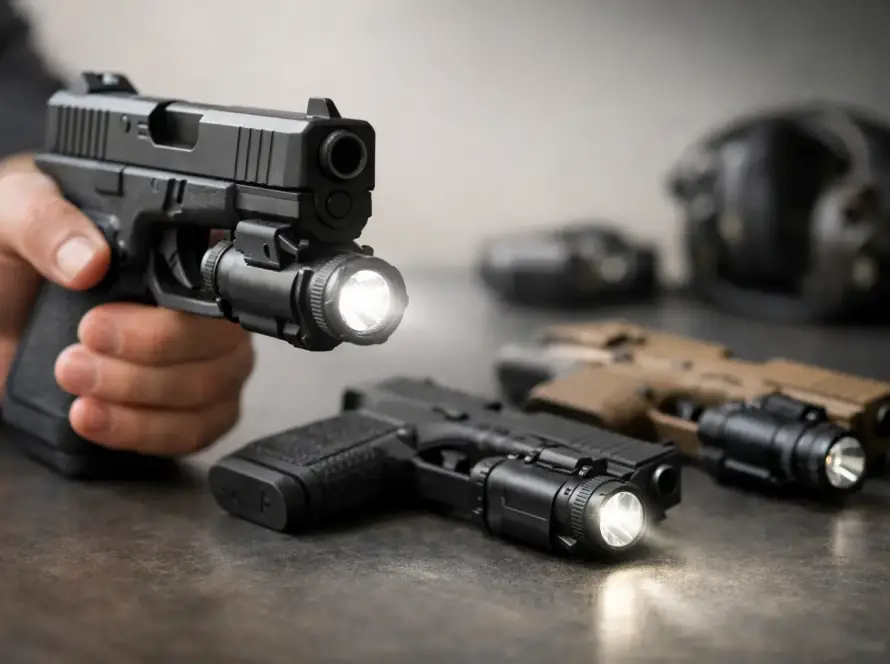
A mounted white light is one of the most practical upgrades because positive identification matters. You must be able to identify what is happening before making any defensive decision. Choose a durable light with controls you can operate safely without compromising your grip.
A sling can be useful for securing the firearm during training or movement, but it requires practice to avoid entanglement. Side saddles and shell carriers can provide extra ammunition, though they add weight and can affect balance. If you use one, select a secure mounting system and verify it stays in place during live-fire practice.
Avoid treating accessories as a substitute for fundamentals. A dependable shotgun, a secure storage solution, a white light, hearing and eye protection for training, and quality maintenance supplies will do more for most owners than a pile of cosmetic add-ons.
Ammunition Testing and Maintenance Matter
The shotgun and the ammunition are a system. Test your selected loads at a lawful range to confirm reliable function and understand their patterning characteristics with your specific barrel and choke setup. Results can vary between firearms, even with the same load.
Keep the firearm clean, lubricated according to the manufacturer’s guidance, and inspected for worn or damaged parts. This is especially relevant for semi-automatic models, which may be more sensitive to fouling or neglected maintenance. Replace questionable magazines, springs, mounts, or accessories before they become a reliability issue.
Keep defensive ammunition stored securely and separate from training ammunition when practical. Clearly organized gear reduces the chance of loading the wrong shells for a range session or overlooking older ammunition that should be rotated out.
Training and Secure Storage Come First
Buying the shotgun is the easy part. Responsible ownership means learning the platform through qualified instruction and regular, safe practice. Focus on safe loading and unloading, muzzle discipline, trigger discipline, malfunction response, and how to access and secure the firearm without creating unnecessary risk.
A home-defense plan should also include avoidance, communication, and calling emergency services when appropriate. A firearm is not a replacement for reinforced doors, exterior lighting, alarm systems, smoke detectors, medical supplies, or family emergency planning.
Secure storage is part of readiness, not an obstacle to it. The right solution depends on household access needs and whether children, visitors, or other unauthorized people may be present. Quick-access locking systems, safes, and locking devices each have a role when selected and used correctly.
Buy for Control, Not Hype
The strongest choice is usually a proven shotgun from a reputable manufacturer, configured simply and matched to the shooter. Handle several models. Compare pump and semi-automatic actions. Consider 12 gauge and 20 gauge honestly. Then invest in training, a secure storage method, and enough range time to know the firearm works for you.
Guns & Tactics customers who shop with that mindset can build a practical defense setup without chasing unnecessary upgrades. The goal is not to own the most aggressive-looking shotgun. It is to own a reliable tool you can store safely, maintain properly, and operate with sound judgment when it matters.