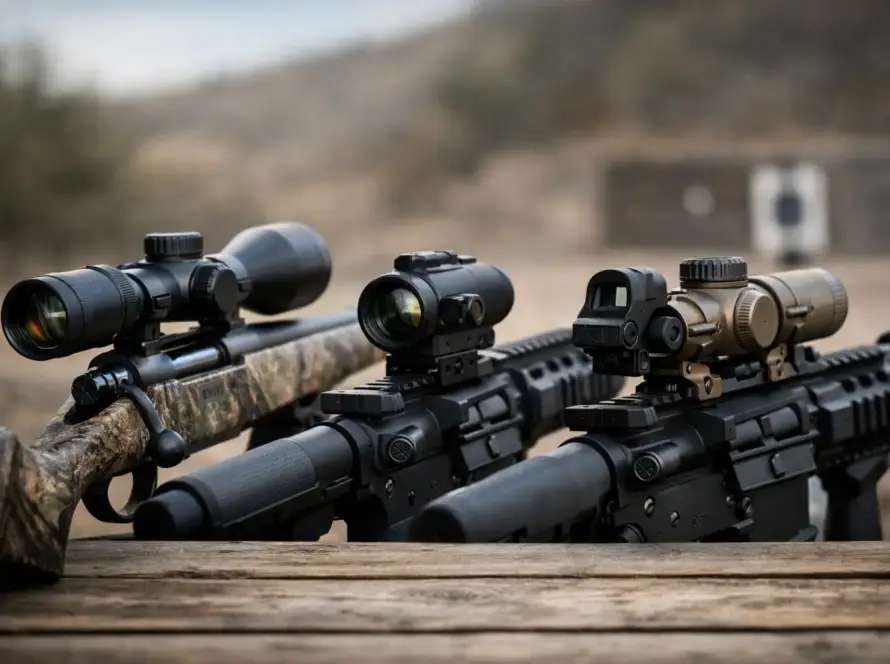
A timer on the range settles this argument faster than internet chatter. In most cases, a shooter who can track the dot will run a pistol faster with a red dot than with irons. But speed is only part of the picture. When you compare red dot vs iron sights, the real answer depends on your firearm, your training time, your intended use, and how much gear complexity you want to manage.
For some shooters, irons are still the right setup. They are simple, proven, and always on. For others, a quality red dot is one of the most useful upgrades you can put on a carry gun, home-defense pistol, or rifle. The right choice is not about hype. It is about performance under your conditions.
Red dot vs iron sights: the core difference
Iron sights are a mechanical aiming system. You align the rear sight, front sight, and target in the same visual process. That sounds straightforward, but under stress it asks your eyes to do more work. Your focus should be on the front sight, while the target and rear sight stay less sharp.
A red dot changes that visual task. Instead of lining up two pieces of metal and then placing them on the target, you place a projected dot where you want the shot to go. That usually means faster target acquisition, easier shooting at distance, and less visual strain for many shooters.
The trade-off is obvious. A red dot is an electronic optic. It adds cost, mounting considerations, and battery management. Iron sights do not need batteries, electronics, or lens maintenance. They are lighter, simpler, and harder to completely disable through neglect.
Where red dots usually win
On pistols, red dots give a real advantage once the shooter is trained. The biggest gains usually show up in target-focused shooting. Instead of shifting attention back to the front sight, you stay visually locked on the threat or target and superimpose the dot. That matters in defensive shooting, practical competition, and any drill where time and precision both count.
At longer handgun distances, dots also make life easier. A 15-yard shot with irons is very manageable, but a 25-yard shot on a smaller target often shows the difference. The dot gives a more precise aiming reference than a wider front sight blade, especially when the target is partially obscured or small.
For rifle setups, the case is even stronger at close to mid-range distances. A red dot sight is fast, works well in awkward positions, and supports shooting with both eyes open. For defensive carbines, truck guns, and many general-purpose range rifles, that is hard to beat.
There is also an advantage for aging eyes. Shooters with declining near-focus ability often struggle with clean front sight focus. A red dot can keep them in the fight longer and with more confidence.
Where iron sights still make sense
Iron sights remain the low-maintenance option. If you want a setup with no batteries, fewer failure points, and minimal bulk, irons still deliver. That matters on deep-concealment pistols, backup guns, basic range pistols, and some hunting sidearms that need to stay simple.
They also make financial sense. A quality set of sights costs far less than a quality optic, plus slide milling or an optics-ready handgun if your pistol is not already cut. For many gun owners, the money saved on hardware is better spent on ammunition and training.
Durability is another factor. Good pistol optics are far better than they used to be, but iron sights still have the edge in raw simplicity. Drop the gun, scrape the lens, ignore maintenance for months, and irons are usually still there doing their job.
That is why many shooters keep irons on every firearm whether they run an optic or not. Backup iron sights on a rifle and suppressor-height co-witness sights on a pistol are not old-school habits. They are insurance.
The training issue most buyers underestimate
A red dot is not magic. It is better, but only after a learning curve.
New dot shooters often present the pistol and spend a moment hunting for the reticle. That delay is usually not the optic’s fault. It comes from inconsistent presentation. With irons, you can get away with small inefficiencies because the front sight is physically there in the window of your vision. With a dot, poor presentation shows up immediately.
The fix is repetition. Once your draw stroke and presentation are consistent, the dot appears where it should. When that happens, many shooters find they can shoot faster and more accurately than they could with irons alone.
If you are not willing to train, irons may be the smarter choice. If you will put in the reps, a red dot often pays off.
Pistol use case matters more than internet opinions
For concealed carry, the answer is no longer automatic. Years ago, the safer recommendation was irons for most people because pistol optics were larger, less durable, and less proven. That has changed. Many carry pistols now come optics-ready from the factory, and compact red dots are common on serious defensive guns.
Still, concealment matters. A dot adds height and can affect the draw depending on the holster, body type, and carry position. It is not usually a deal-breaker, but it is a factor. If you carry every day in plain clothes and want the leanest possible setup, irons keep things trim.
For home defense pistols, a red dot makes even more sense. Concealment is less important, low-light performance matters more, and the ability to stay target-focused is a real advantage.
For competition or high-volume range work, dots are hard to argue against. The speed ceiling is higher once the shooter is up to speed. For casual range use, either system works, and budget often decides the issue.
Rifle and shotgun considerations
On a defensive or general-purpose rifle, red dots are the standard for a reason. They are fast at close range, forgiving of head position, and simple to run under pressure. For shooters who are inside 100 yards most of the time, irons are usually a backup, not the primary system.
Iron sights still fit rifles that need to stay stripped down, light, and independent of batteries. They also make sense as a training tool. But if the rifle is built for defense, training, or fast practical use, a quality red dot usually gives more capability.
Shotguns are more mixed. A bead or rifle-sight setup still works well for many hunting and defensive roles. But a red dot on a tactical shotgun or turkey gun can speed up aiming and tighten practical precision, especially with slugs.
Reliability, batteries, and maintenance
This is where serious buyers need to be honest. Red dots are reliable when they are quality units, mounted correctly, and maintained. Cheap optics fail. Bad mounting jobs fail. Dead batteries fail.
A quality optic from a proven maker reduces that risk, but it does not erase it. You need to torque screws properly, use the right footprint or plate system, verify zero, and replace batteries on a schedule. You also need to keep the lens reasonably clear. Rain, lint, dust, and carbon are all real-world issues.
Iron sights ask less from the owner. There is almost nothing to manage beyond basic inspection. That simplicity has value, especially on hard-use guns.
So which one should you choose?
If your priority is maximum simplicity, lower cost, and minimal maintenance, iron sights are still a solid answer. They are especially practical on budget-conscious pistols, backup guns, and no-frills setups.
If your priority is speed, easier target focus, and stronger performance at distance, a red dot is usually the better tool. That is especially true on defensive pistols, modern carry guns, and practical-use rifles.
The smart middle ground is often a red dot with usable backup irons. That gives you the performance advantage of the optic without giving up a mechanical aiming option. It costs more, but it covers more bases.
There is no universal winner in red dot vs iron sights. There is only the setup that matches your gun, your eyes, your training habits, and the job the firearm needs to do. Buy for the role, not for the argument. A carry pistol, a home-defense handgun, and a range rifle do not all need the same answer.
If you are upgrading a firearm, think past the optic itself. Mounting pattern, sight height, holster fit, battery life, and how often you actually train matter just as much. The best sighting system is the one you can trust when the shot needs to happen cleanly and on time.