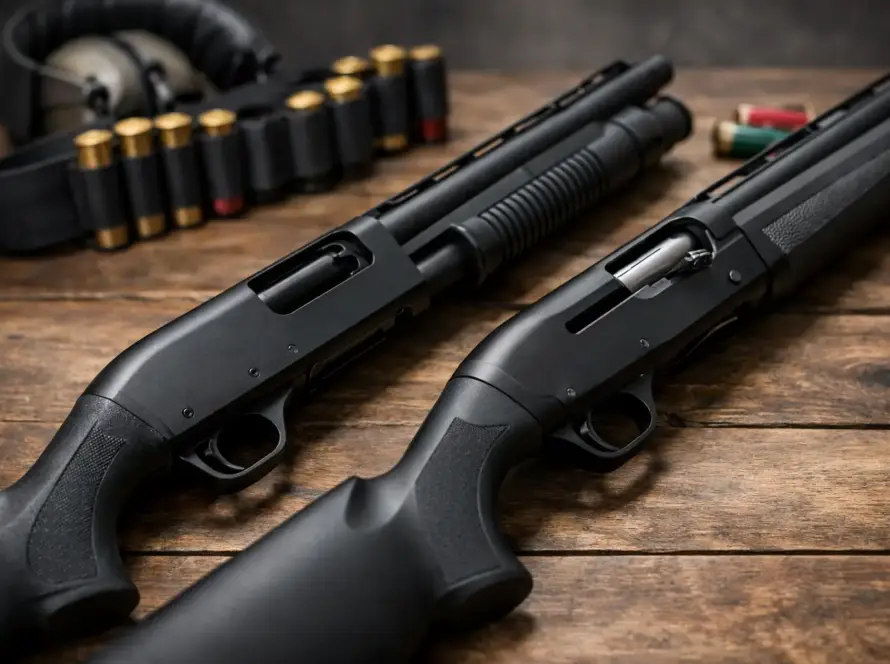
A box marked 12 gauge, 2 3/4 inch, No. 8 tells you far more than one specification. It identifies the shotgun platform it fits, the maximum chamber length it may require, and the shot size inside. This shotgun shell sizes guide separates those markings so you can buy ammunition that matches your firearm, your intended use, and applicable range or hunting rules.
The rule that matters most is simple: use only the gauge and shell length marked on your shotgun’s barrel or receiver, and follow the firearm manufacturer’s instructions. A shell that appears close is not necessarily compatible. When there is any uncertainty, stop and confirm the markings before loading.
Start With Gauge, Not Hull Length
Gauge is the primary size designation for most shotgun shells. Common gauges in the United States are 12, 20, 16, 28, and .410 bore. A lower gauge number means a larger bore diameter, which is why a 12 gauge is larger than a 20 gauge.
The exception is .410. It is measured by bore diameter in inches rather than by the gauge system. A .410 shell will not fit a 28-gauge shotgun, despite the numbers seeming close.
For most buyers, 12 gauge and 20 gauge are the practical starting points. The 12 gauge has the broadest ammunition selection and handles a wide range of target, hunting, and defensive loads. It can also produce more recoil, depending on the load and shotgun weight. The 20 gauge is lighter and generally more comfortable for many new shooters, smaller-framed shooters, and hunters who want a more portable field gun.
Sixteen gauge remains useful for some upland hunters, but ammunition availability is more limited than 12 or 20 gauge. Twenty-eight gauge and .410 bore are popular for clay targets, upland hunting, and shooters who value light handling, yet their smaller payloads demand more deliberate ammunition selection.
Shotgun Shell Sizes Guide: Read the Box in Order
A typical box may read: 12 gauge, 3 inch, 1 1/4 ounce, No. 4 shot. Each part answers a different question.
Gauge tells you the bore family. It must match the firearm. A 20-gauge shell does not belong in a 12-gauge shotgun, and vice versa.
Length refers to the fired shell length, not always the length measured before firing. Common lengths are 2 3/4 inch, 3 inch, and 3 1/2 inch. Your firearm must be chambered for that length or longer. A shotgun marked for 2 3/4-inch shells should never be loaded with a 3-inch shell.
Payload weight is the amount of shot, commonly listed in ounces. More payload can increase pattern density, but it often raises recoil. It is not automatically the better choice for every target or hunt.
Shot size describes the diameter of individual pellets. It is separate from gauge and shell length. No. 8 shot, for example, has many small pellets and is common for clay targets. Larger pellets such as No. 4, No. 2, BB, or buckshot have fewer pellets per payload and serve different purposes.
Velocity is usually shown in feet per second. It can affect recoil, target lead, and pattern performance. Higher velocity is not a universal upgrade. Fast loads can be useful, but they may be less pleasant during long range sessions and can pattern differently in a specific shotgun.
Chamber Length Is a Hard Limit
Shotgun chamber markings are not suggestions. A shell opens and extends when fired, so a longer shell in a shorter chamber can create unsafe pressure conditions and interfere with the forcing cone area. Check the barrel stamp, owner’s manual, or manufacturer documentation for the correct chamber length.
A 3-inch chamber can generally fire 2 3/4-inch and 3-inch shells of the correct gauge. A 3 1/2-inch chamber can generally accommodate shorter shells in the same gauge. That does not mean every load is appropriate for every shooter or firearm. Heavy magnum loads may be unpleasant to fire, unnecessary for the job, or unsuitable for certain older shotguns.
Do not confuse shell length with magazine capacity. A longer shell occupies more space in a tubular magazine, so a firearm may hold fewer 3-inch shells than 2 3/4-inch shells. Verify capacity and comply with any hunting regulations that limit the number of shells a shotgun may hold.
Match the Load to the Job
The most useful shell is the one that patterns well in your shotgun and fits the rules where you shoot. Gauge alone does not determine performance.
For clay targets, 12- and 20-gauge target loads in 2 3/4-inch shells are common choices. No. 7 1/2, No. 8, and No. 9 shot are frequently used, with the best selection depending on the discipline, target distance, and range requirements. Light target loads can reduce fatigue during high-volume practice.
For upland birds, hunters often select shot size based on the game, cover, expected distance, and legal requirements. Smaller shot can offer dense patterns for close-range birds, while larger shot may be selected for tougher birds or longer opportunities. Pattern your chosen load before the season rather than relying on box labels alone.
Waterfowl hunting typically requires approved nontoxic shot. Steel is widely available, while bismuth and tungsten-based loads may offer different density and patterning characteristics at a higher price. Verify federal, state, and local rules before buying or carrying hunting ammunition. Florida hunters should also confirm current area-specific regulations and seasons.
Buckshot and slugs are distinct categories, not generic substitutes for birdshot. Buckshot uses large round pellets. Slugs are single-projectile loads designed for shotguns and require particular attention to barrel, choke, sighting system, and manufacturer guidance. For all-purpose range use, select the load type specifically permitted by the facility and appropriate for the firearm.
Gauge Comparison for Practical Buying
A 12 gauge is usually the easiest place to find broad inventory across target loads, birdshot, buckshot, slugs, and hunting-specific options. It is a logical choice for shooters who want one common platform with extensive ammunition availability. The trade-off is recoil, especially with heavy payloads or lightweight shotguns.
A 20 gauge offers substantial versatility in a lighter package. It is often a strong fit for upland hunting, recreational clays, and shooters prioritizing manageable recoil. Ammunition selection is still widely available, although it is not as extensive as 12 gauge in every load category.
A 28 gauge can be an excellent field and sporting option when matched to realistic distances and appropriate payloads. Its appeal is handling, not simply low recoil. .410 bore is compact and capable, but the smaller payload leaves less margin for poor target alignment or a weak pattern. It is not automatically the easiest choice for a beginner.
Do Not Confuse Shot Size With Buckshot Numbers
Small birdshot sizes use a numbering system where larger numbers indicate smaller pellets. No. 9 is smaller than No. 8, and No. 8 is smaller than No. 6. Buckshot uses a separate convention. No. 4 buck is not the same as No. 4 birdshot. The pellet sizes, intended applications, and pattern behavior are substantially different.
This distinction prevents common ordering errors. Before purchase, read the entire product description and box label: gauge, length, shot type, pellet size, payload, velocity, and shell count. Similar-looking boxes can contain very different loads.
Patterning Makes Specifications Useful
Box specifications provide a starting point, but your shotgun decides the final pattern. Barrel length, choke, bore design, ammunition construction, and distance all affect how pellets distribute on a target. Two loads with the same gauge and shot size can perform differently through the same shotgun.
Pattern from a stable position at realistic distances using the choke and load you plan to use. Follow all range rules, use proper eye and hearing protection, and confirm that the range permits the load type. Record which load produces consistent coverage for your intended purpose. This is especially valuable before hunting season or when changing from lead to steel or another nontoxic material.
Buy With the Firearm Markings in Hand
Before selecting shells, verify four details: the shotgun’s gauge, chamber length, compatible load guidance from the manufacturer, and the rules for your range or hunting area. Then choose the payload and shot type that fit your actual use rather than buying the heaviest or fastest box on the shelf.
Keep ammunition in its original labeled packaging, store it dry and secure, and keep it separate from unauthorized users. A correctly matched shell is the foundation of better practice, cleaner purchasing decisions, and safer time behind the shotgun.