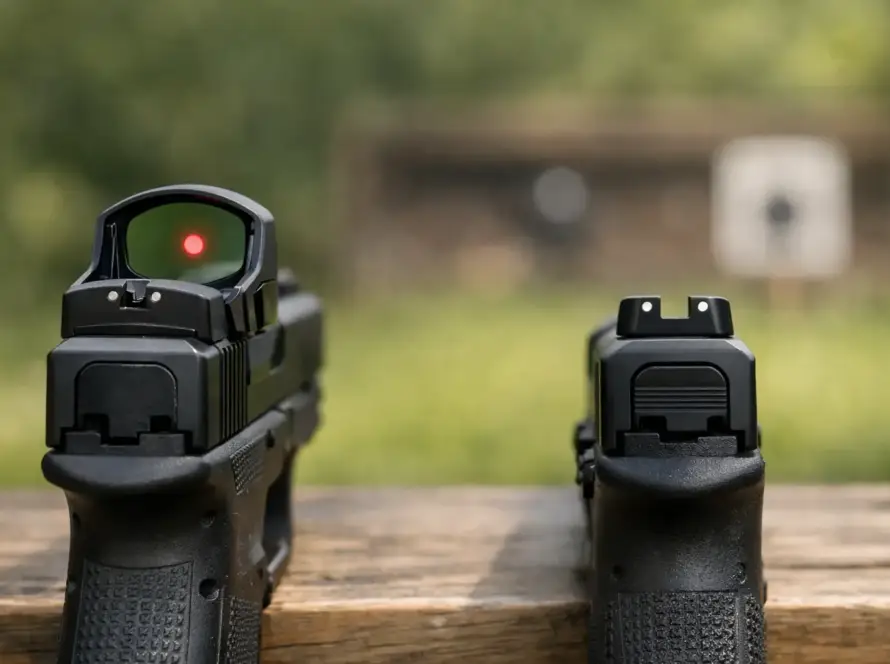
The SIG P365 XMacro is built for shooters who want more than micro-compact capacity without stepping all the way up to a traditional compact pistol. It keeps the P365 fire-control platform but adds a full-length grip, 17-round magazines, a flatter shooting profile, and an accessory rail that makes practical upgrades easier. For concealed-carry buyers who train regularly, that combination is the point.
SIG P365 XMacro Review: What You Get
The standard P365 XMacro is a striker-fired 9mm built around SIG Sauer’s modular P365 chassis system. It typically pairs a 3.1-inch barrel with an integral compensator in the slide, a large XMacro grip module, optics-ready slide cuts, and steel night sights. Capacity is 17+1 with the supplied magazines, giving it duty-pistol magazine capacity in a package that remains thin enough for inside-the-waistband carry.
The XMacro is not simply a P365 with a longer grip. The grip module changes how the pistol handles. Most adult shooters can get a full firing grip without hanging a finger below the magazine baseplate, and the longer frame provides more leverage during recoil. That matters on fast strings, reloads, and one-handed shooting at the range.
Its rail is another practical advantage. A compact weapon light can be mounted without relying on proprietary adapters or aftermarket workarounds. For buyers setting up a carry pistol around a light, optic, quality holster, and spare magazines, the XMacro starts with the right mounting real estate.
Capacity Is the Main Selling Point
Seventeen-round capacity is the XMacro’s clearest advantage over most slim carry pistols. A standard P365, P365 XL, Glock 43X, or other narrow 9mm can be easier to hide in light clothing, but capacity often drops into the 10- to 15-round range depending on the model and magazine setup. The XMacro gives buyers a factory 17-round option without the bulk of a double-stack compact handgun.
That does not make it the right answer for every carry setup. The XMacro’s grip is the portion most likely to print under a fitted shirt or thin cover garment. Shooters who prioritize the smallest possible profile may be better served by the original P365 or P365 XL. But if the goal is a carry gun that feels closer to a compact service pistol in the hand, the XMacro earns its larger footprint.
The magazine length also makes reloads more positive. The magazines are easy to seat, easy to strip out, and substantial enough to manipulate under pressure. For range work, having several 17-round magazines reduces downtime and gives shooters more repetitions before reloading.
Shootability: Better Than Its Size Suggests
The compensated XMacro slide is designed to reduce muzzle rise, and it generally makes the pistol feel more controlled than a short-barreled carry gun of similar size. The benefit is most noticeable when firing standard-pressure 9mm ammunition quickly. The gun returns to the target efficiently, and the larger grip helps keep the pistol anchored in the hand.
There are trade-offs. Compensated pistols can produce more visible flash and blast than a non-compensated model, particularly with certain defensive loads and in low light. Ammunition selection can also affect how the pistol feels and cycles. A serious carry pistol should be tested with the ammunition intended for defensive use, not just a few boxes of inexpensive range ammunition.
The flat-faced trigger is generally usable for a factory striker-fired carry gun. It offers a predictable break and reset, although shooters accustomed to a tuned aftermarket trigger or a premium single-action platform may still find it ordinary. That is not a flaw. For a defensive pistol, consistency and familiarity matter more than chasing the lightest pull weight.
The XMacro’s grip texture is aggressive enough to support control without feeling overly abrasive during extended carry. It is a practical middle ground. If you carry against bare skin or wear minimal cover garments, holster selection and body placement will still determine comfort more than grip texture alone.
Optics and Lights Make Sense Here
The XMacro is optics-ready, and the platform benefits from a compact enclosed-emitter or open-reflex carry optic. The longer grip and increased capacity make this a pistol many owners will use for serious training, not just occasional carry. An optic can improve target tracking and precision at distance once the shooter has a solid zero and puts in consistent practice.
Keep the setup practical. A compact optic, a durable mounting solution, and appropriate backup sights are more useful than adding unnecessary bulk. The factory sight configuration provides a workable backup reference, though exact sight height and co-witness will depend on the optic selected.
A compact rail-mounted light is also a reasonable addition for users who carry in low-light environments or keep the pistol in a defensive role at home. The important detail is holster support. Buy a holster made specifically for the P365 XMacro and the exact light model installed. A generic fit is not an acceptable substitute for secure retention and proper trigger coverage.
Concealment Is Good, Not Invisible
The P365 XMacro carries thinner than many compact double-stack handguns, but buyers should be honest about what the dimensions mean. It is easier to conceal than many Glock 19-size pistols through the slide and frame, yet the full-size grip can print more than a short-grip micro-compact.
For many shooters, the best carry position will be appendix inside the waistband or a strong-side inside-the-waistband holster with appropriate ride height and cant. A quality belt matters. A heavy 17-round 9mm pistol, loaded optic, light, and spare magazine can expose the weaknesses in a flimsy belt or poorly designed holster quickly.
Body type, clothing, and daily activity all change the answer. A larger-framed shooter wearing an untucked overshirt may find the XMacro easy to conceal. A smaller shooter in business-casual clothing may prefer the P365 XL, standard P365, or another shorter-grip option. The XMacro is carry-capable, but it is not a pocket pistol and should not be treated like one.
XMacro Variants Matter
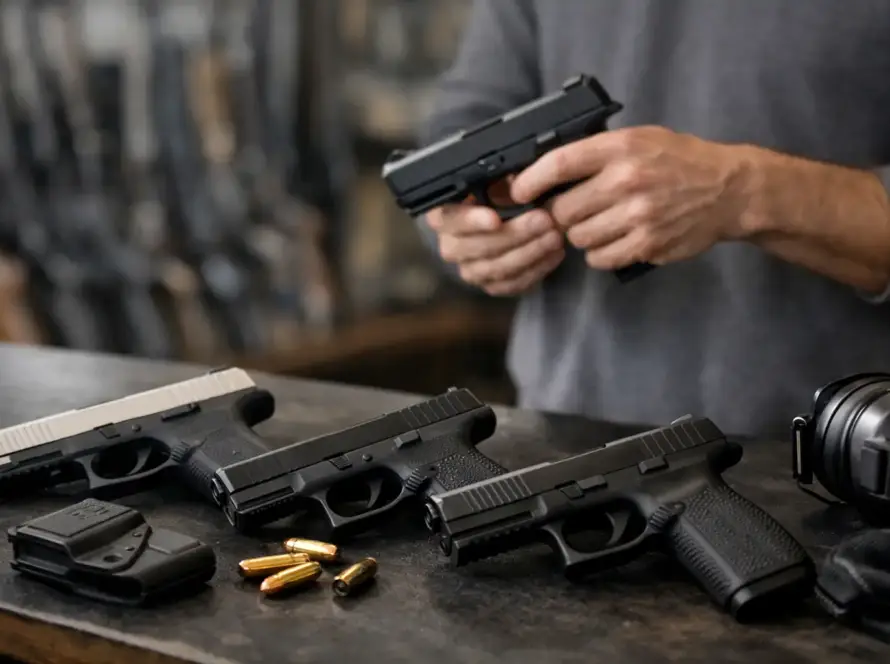
Buyers should pay close attention to the exact XMacro configuration before ordering. The standard XMacro Comp is known for its compensated slide and short barrel arrangement. The XMacro TACOPS uses a longer barrel without the compensator and commonly adds features such as an extended magwell and additional magazines. Other variants may include different sights, finishes, manual safety options, or optic configurations.
The decision comes down to intended use. The compensated model is appealing for shooters who value recoil control in a carry-length slide. The TACOPS may appeal to buyers who want a more conventional barrel setup, extra magazines, and a package better suited to high-volume range work. Do not assume all XMacro holsters, slides, barrels, and accessories interchange without checking the exact model.
Who Should Buy the P365 XMacro?
The XMacro is a strong fit for the shooter who wants one 9mm pistol to cover concealed carry, regular range training, and practical home-defense duty. It offers enough grip and capacity to build skill efficiently while remaining slimmer and easier to carry than many compact pistols.
It is less compelling for someone who already carries a P365 XL comfortably and sees no need for 17-round magazines, a rail, or a larger grip. It may also be too large for buyers whose priority is deep concealment in hot weather. In that role, the smaller P365 variants still have a clear place.
For the right owner, the XMacro avoids a common compromise: buying a small carry pistol that is unpleasant to train with, then buying a larger pistol for everything else. Select the exact variant, add a proven holster and enough magazines for training, verify reliability with your chosen ammunition, and let consistent range time determine whether the XMacro belongs in your daily carry rotation.