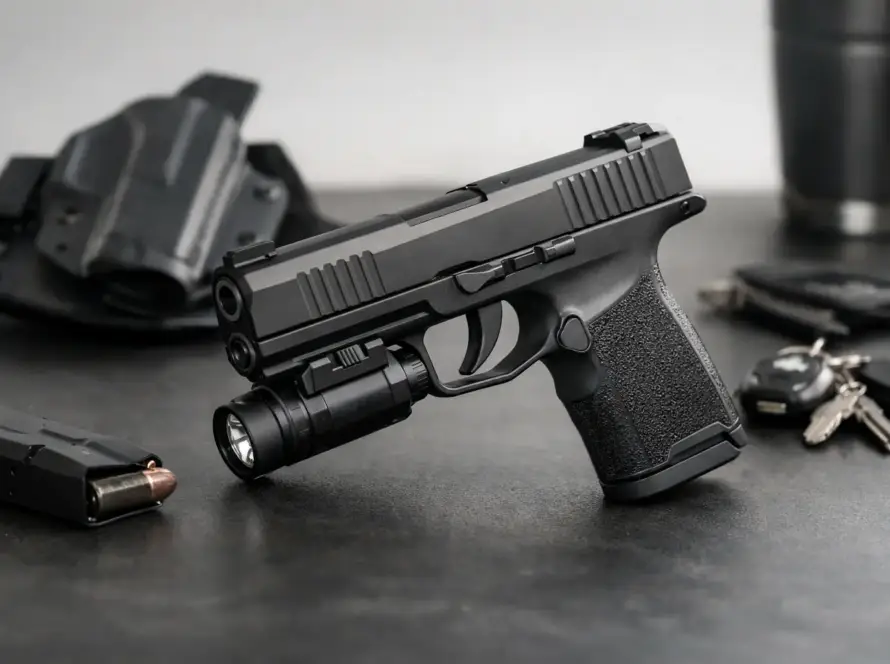
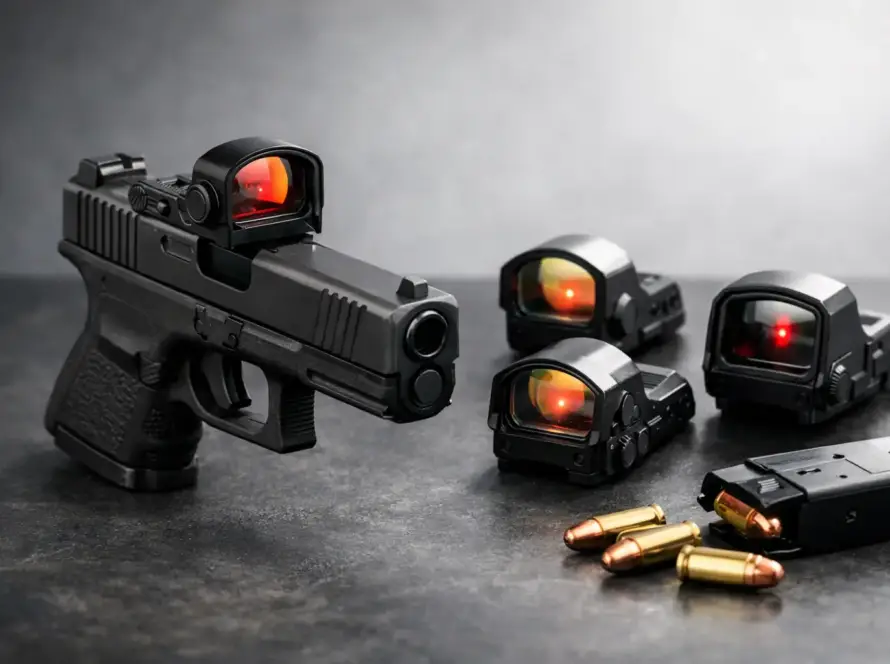
The wrong holster shows up fast on the firing line. You feel it when the gun shifts during movement, when the draw snags on the cover edge, or when reholstering turns into a two-handed fight. If you’re shopping for an OWB holster for range use, the goal is simple – stable carry, clean access, and enough retention to keep the pistol secure without slowing down training.
A range holster does not need to solve every problem. It does not need deep concealment, all-day comfort under a jacket, or the smallest footprint possible. It needs to support repetitions. That means a consistent draw, solid belt attachment, safe reholstering, and a fit that matches your handgun exactly.
What makes an OWB holster for range use different
OWB works well at the range because it keeps the pistol accessible and easy to manage during drills. Compared to inside-the-waistband options, an outside-the-waistband setup usually gives you a more natural grip on the draw and more space around the mouth of the holster when it’s time to reholster. That matters when you’re running timed strings, practicing from low ready to presentation, or doing multiple reps over a long session.
Range use also changes the priority list. Comfort still matters, but draw consistency matters more. Concealment becomes less important. A little extra bulk is usually fine if it gives you better retention hardware, stronger mounting points, or a more rigid shell. This is one reason molded Kydex remains a common choice for training use. It holds shape, resists sweat and debris, and gives a repeatable fit for a specific pistol.
That said, “best” depends on how you train. A static lane shooter working slow-fire groups may want a simple, low-profile OWB setup with passive retention. A shooter doing draw practice, movement drills, and reload work may want a more aggressive belt mount and adjustable retention. If you train with a weapon light or a red dot, compatibility becomes non-negotiable.
Start with handgun fit, not holster style
A holster is only as good as its fit. For range use, that means buying for the exact handgun model and, if applicable, the exact light. “Fits most” is usually a warning sign. A Glock 19, Glock 17, SIG P320, Springfield Echelon, Canik TP9, or Taurus G3 may look close in profile, but small differences in slide width, trigger guard shape, and light dimensions change retention and draw feel.
If your pistol wears an optic, suppressor-height sights, or a threaded barrel, check clearance before anything else. Many modern OWB holsters are optic-ready, but not all of them handle taller sights well. Light-bearing holsters are even more specific. A holster cut for one weapon light may not safely retain a pistol using another light, even if the gun itself matches.
This is where many buyers get sideways. They choose a generic fit to save time, then end up chasing retention screws, trimming material, or abandoning the holster after two range trips. A proper fit saves more time than any shortcut.
Retention should be secure, not slow
For most range shooters, passive retention is enough. That’s the friction-based hold you adjust with screws to keep the pistol seated while still allowing a clean draw. Done right, you get a clear click on insertion and a smooth release on the draw stroke.
Active retention has its place, especially if your training includes movement, positional shooting, or classes where you’re up and down off barriers. A thumb release or locking system can add security, but it also adds complexity. If the release placement fights your grip or your thumb path, your first shot time will show it.
There is no universal answer here. If your range work is mostly controlled drills from a belt line, passive retention is often the better call. If your setup sees harder movement or more dynamic training, a quality active-retention OWB may be worth the trade.
Belt attachment matters more than most buyers think
A good holster on a weak mount still feels bad. Belt loops, paddle systems, and modular mounts all have strengths, but for range use, stability should be the deciding factor.
Fixed belt loops usually give the most secure ride. They hold the holster close, reduce shift during the draw, and keep placement consistent through repeated reps. A paddle can be convenient if you want quick on-and-off, but some paddles move more than dedicated loops, especially on lighter belts. That movement shows up when you try to draw fast or reholster one-handed.
A proper gun belt is part of this equation. Even the best OWB holster for range use will underperform on a flimsy department-store belt. You want enough stiffness to support the handgun, spare magazines, and repeated pressure from draw practice. A rigid belt keeps the holster angle stable and helps the gun return to the same spot every time.
Ride height and cant change the draw
Two holsters can fit the same pistol and feel completely different because of ride height and cant. Ride height determines how high or low the gun sits relative to the belt. Cant changes the angle.
For range training, many shooters prefer a fairly neutral setup. A straight or slightly forward cant often supports a natural draw without forcing the wrist into an awkward angle. Too much forward cant can make the draw feel cramped. Too high a ride can make the gun top-heavy. Too low can slow access or interfere with movement.
This is where adjustability helps. If the holster lets you tune ride height and cant, you can set it around your body type, belt position, and training style. A broad-shouldered shooter with long arms may prefer a different setup than a compact-frame shooter running the same pistol.
Material choice: Kydex vs hybrid vs leather
For pure range work, Kydex usually wins on function. It is rigid, weather-resistant, and predictable. It gives consistent retention, a clear reholster path, and easy maintenance after dusty or sweaty sessions.
Leather can still work, especially if you like a traditional feel, but it asks for more attention. It can soften over time, retain moisture, and vary more in draw feel depending on wear and conditions. That may be fine for casual use, but for repetitive training, consistency matters.
Hybrid designs can split the difference, but they make the most sense when comfort is a bigger priority than speed and simplicity. Since this article is about an OWB holster for range use, that usually pushes buyers back toward a hard-shell design.
Features that are worth paying for
Not every add-on is useful. For range use, a few features tend to justify the spend.
An optic cut is a strong buy if you run a red dot now or plan to later. Adjustable retention is close to mandatory. Sweat guards can help, but they should not interfere with your grip. A flared holster mouth helps with fast, one-handed reholstering. If you train with a light, dedicated light-bearing compatibility is essential, not optional.
What is not always worth it is excess bulk built around concealment wings, overly complex mounting stacks, or gimmick hardware that adds size without helping performance. A clean draw path and secure belt mount matter more than flashy extras.
Safety and range rules still decide what works
Not every range allows drawing from the holster. Some indoor facilities restrict it unless you’re in a class, on a private bay, or approved for holster work. Before you buy around advanced draw practice, make sure your local range supports that kind of training.
Also pay attention to trigger coverage and reholstering safety. The trigger guard should be fully covered. The holster should stay open when empty so you can reholster without pointing the muzzle in a bad direction or using your support hand to open the mouth. If the setup collapses, shifts, or forces awkward handling, it’s the wrong tool for training.
Choosing the right setup for your training
If your range time is mostly basic handgun reps, a molded Kydex OWB with adjustable passive retention, fixed belt loops, and optic-ready clearance is a hard setup to beat. If you run movement-heavy drills or training classes, consider stepping up to stronger retention and a stiffer mounting platform. If your pistol wears a light, start there and filter every option through exact light compatibility.
Buy for the gun you actually shoot, not the one you may own later. Buy for the drills you actually run, not the ones you saw online once. The best range holster is the one that makes every repetition cleaner, safer, and easier to repeat the same way next session.
When you’re ready to upgrade your belt line, keep it simple and buy for fit first. The rest of the performance usually follows.